Bali is not just beaches and temples. The food alone is worth the trip. From slow roasted suckling pig and crispy duck to fragrant fried rice and silky black rice pudding, here are the dishes that will make your taste buds remember Bali forever.
Balinese cuisine is not just Indonesian food with a different name. It is a completely distinct culinary tradition shaped by centuries of Hindu culture, volcanic soil, tropical harvests, and recipes passed down through generations. The flavors here are bold, fragrant, and layered with a complexity that surprises even the most well traveled food lovers. Every dish starts with bumbu, a hand ground spice paste made from fresh turmeric, galangal, shallots, garlic, chili, lemongrass, and a dozen other ingredients that form the soul of Balinese cooking.
The best food in Bali is not served in fancy restaurants with ocean views and English menus. It is served in warungs, the small local restaurants where Indonesian families eat every day. These places often look unimpressive from the outside, but one bite of their food will change everything you thought you knew about Balinese cooking. The flavors are deeper, the portions are generous, and the experience is authentic in a way that no tourist restaurant can replicate.
The easiest way to discover the best warungs is to travel with a private driver who grew up eating this food. Your driver knows where the locals eat, which warungs have the freshest dishes, and which roadside stalls are worth pulling over for. You will discover places that no guidebook or travel blog has ever mentioned. For tips on eating safely and avoiding stomach issues, check out the food and water safety section of our Bali safety guide.
If there is one dish that defines Balinese cuisine, it is Babi Guling. This is a whole suckling pig stuffed with a fragrant paste of turmeric, coriander seeds, lemongrass, garlic, and chili, then slow roasted over a coconut husk fire for hours. The result is skin so crispy it shatters when you touch it and meat so tender and flavorful that every bite is an event.
Babi Guling was traditionally reserved for ceremonies and celebrations, but today it is available daily at specialist warungs across the island. A typical serving comes with steamed rice, lawar (a traditional mixed vegetable dish), urutan (Balinese sausage), crispy skin, and a fiery sambal that ties everything together.
This is the one dish you absolutely cannot leave Bali without trying. Nothing else tastes quite like it, and every Balinese local will tell you it is the pride of their island's kitchen.
Ask your driver to take you to a local Babi Guling warung where the locals eat. The best ones sell out by early afternoon, so go for lunch, not dinner.
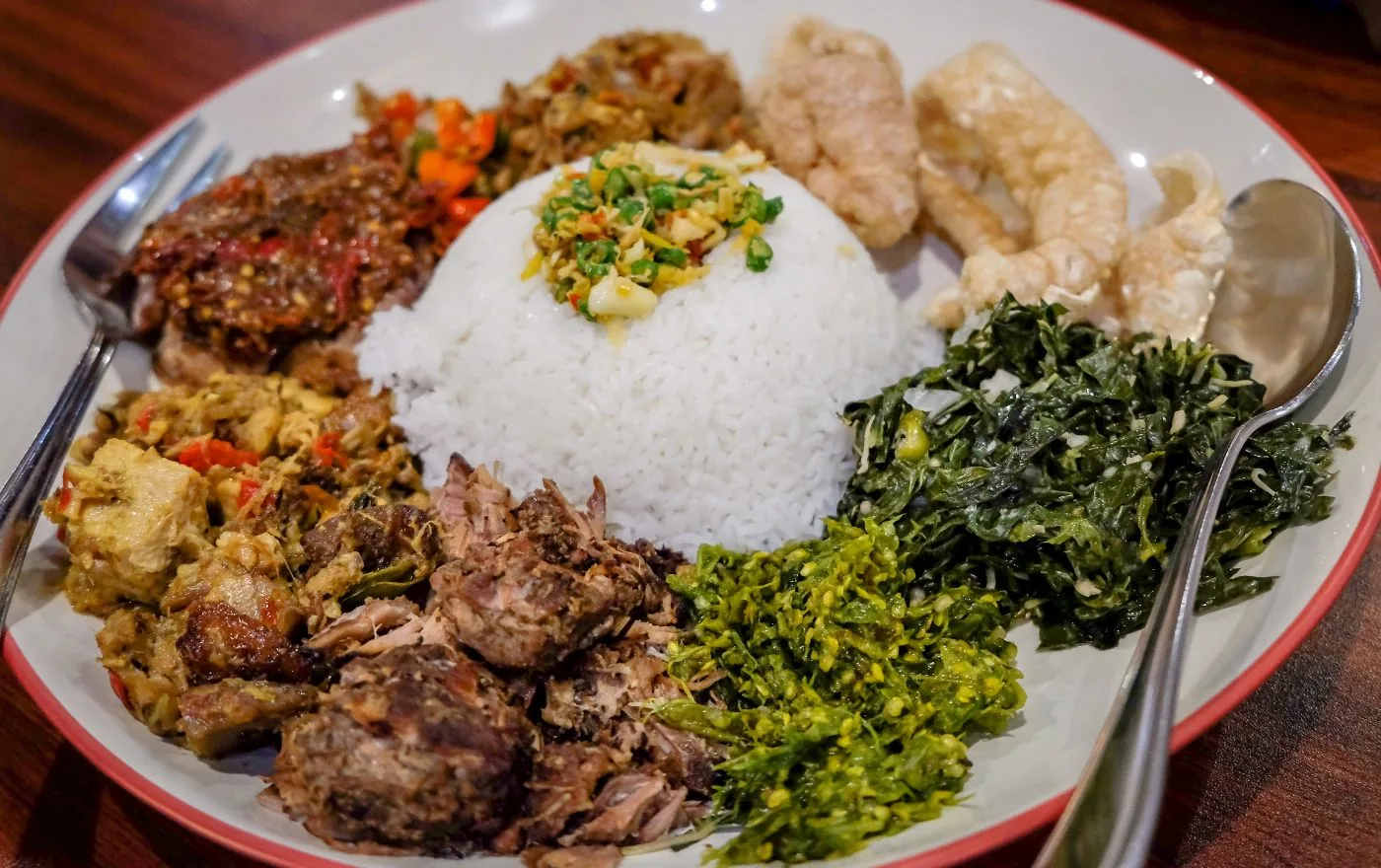
Babi Guling, Bali's signature suckling pig with shatteringly crispy skin
Bebek Goreng is the Balinese answer to crispy duck, and it is nothing like the versions you may have tried elsewhere. The duck is first marinated in a bold blend of turmeric, garlic, ginger, galangal, and chili, then slow steamed or braised until the meat becomes incredibly tender. After that long, patient process, the duck is deep fried at high heat until the skin turns golden and impossibly crunchy while the meat stays juicy and packed with flavor on the inside.
A plate of Bebek Goreng typically arrives with a generous mound of steamed rice, fresh sambal matah (a raw shallot and lemongrass relish), crunchy vegetable sides, and sometimes a bowl of clear broth for sipping between bites. The contrast between the shattering crispy skin and the soft, spice saturated meat makes this one of the most satisfying dishes on the island.
Bebek Goreng is served at warungs and restaurants across Bali, and it pairs perfectly with a cold drink on a warm afternoon. Ask your driver to take you to a spot where the duck is prepared fresh daily, and you will taste the difference immediately.
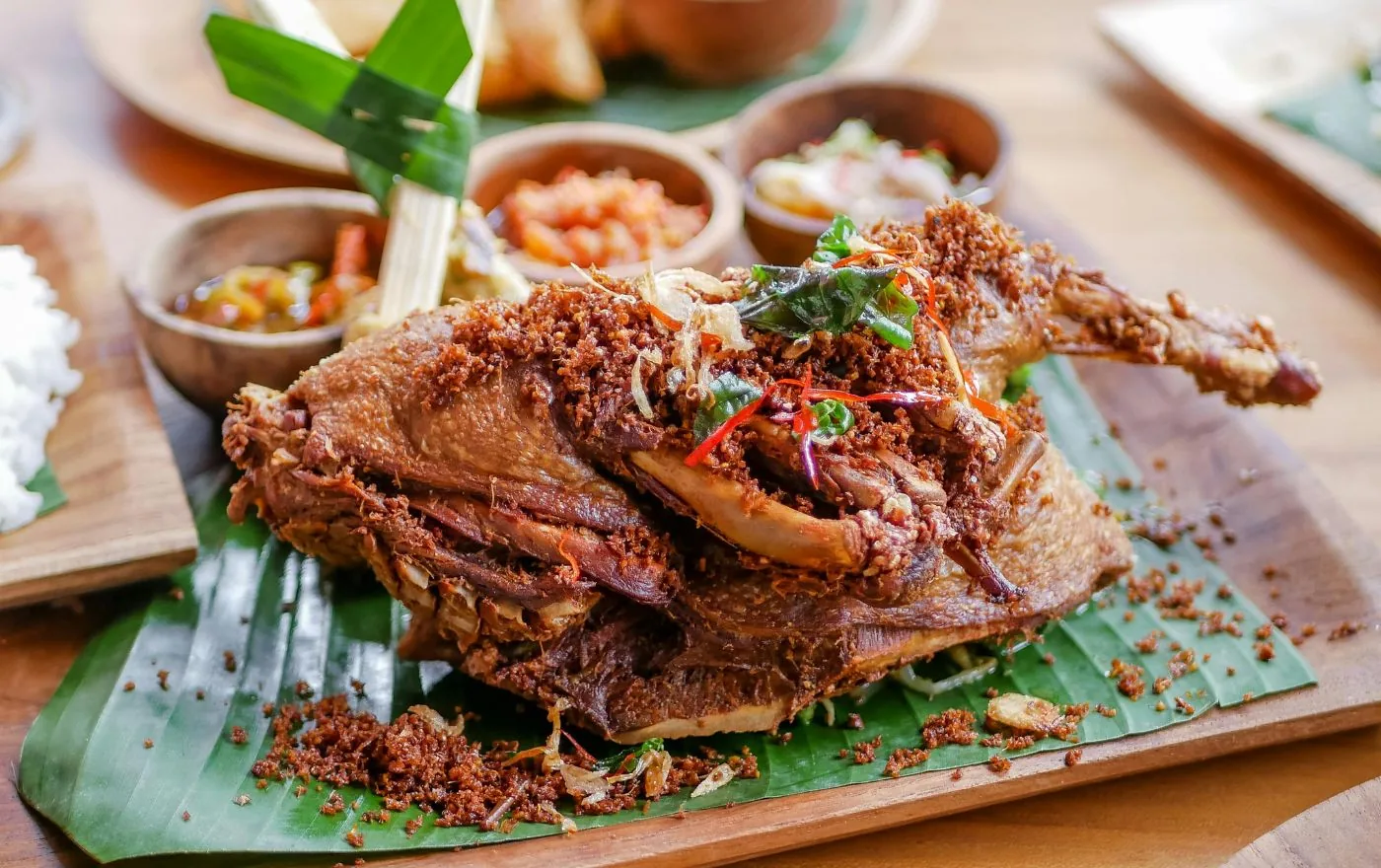
Bebek Goreng, crispy fried duck with a golden, crunchy skin and tender spiced meat
Nasi Goreng is fried rice elevated to an art form. It is cooked in a blazing hot wok with sweet soy sauce (kecap manis), garlic, shallots, chili, and a touch of shrimp paste that gives it a savory depth you will not find in any other fried rice on earth. Each plate is crowned with a perfectly fried egg, a scattering of crispy shallots, crunchy prawn crackers (kerupuk), and fresh cucumber slices on the side.
You will find Nasi Goreng absolutely everywhere in Bali, from five star hotel restaurants to tiny roadside carts that set up at midnight and fill the air with the smell of sizzling garlic. Every cook has their own version, and the simplest ones from the smallest warungs are often the most memorable. It can be made with chicken, seafood, or vegetables, and it is the kind of comfort food that you will crave long after you leave Bali.
Order Nasi Goreng Spesial to get the full experience with a fried egg, satay skewer, and extra toppings. The late night street carts serve some of the best versions on the island.
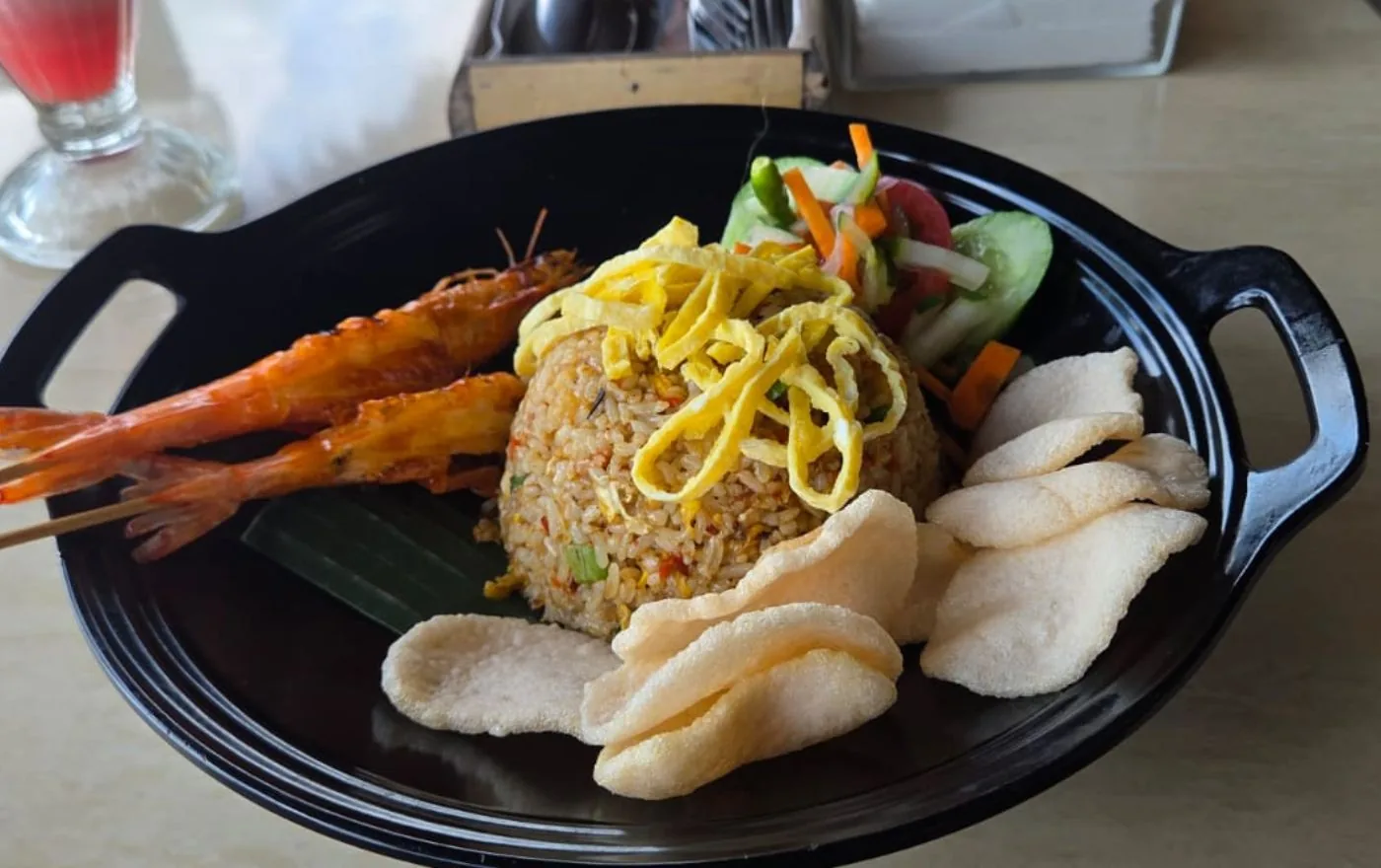
Nasi Goreng served with a grilled shrimp skewer and all the classic garnishes
Mie Goreng is what happens when a handful of egg noodles meets a scorching hot wok, sweet soy sauce, garlic, chili, and whatever vegetables and protein the cook has on hand. The noodles are stir fried until they pick up a light char and a sticky, savory glaze that coats every strand. Chicken, seafood, or vegetables are tossed in, and the whole thing is served with the same beloved garnishes as Nasi Goreng: a fried egg on top, crunchy kerupuk on the side, and slices of fresh cucumber.
This is the perfect late night meal after a day of exploring temples, waterfalls, and rice terraces. The street food version, cooked on a portable cart with a single burner and a well seasoned wok, is often better than any restaurant version. Mie Goreng is available everywhere and loved equally by locals and tourists.
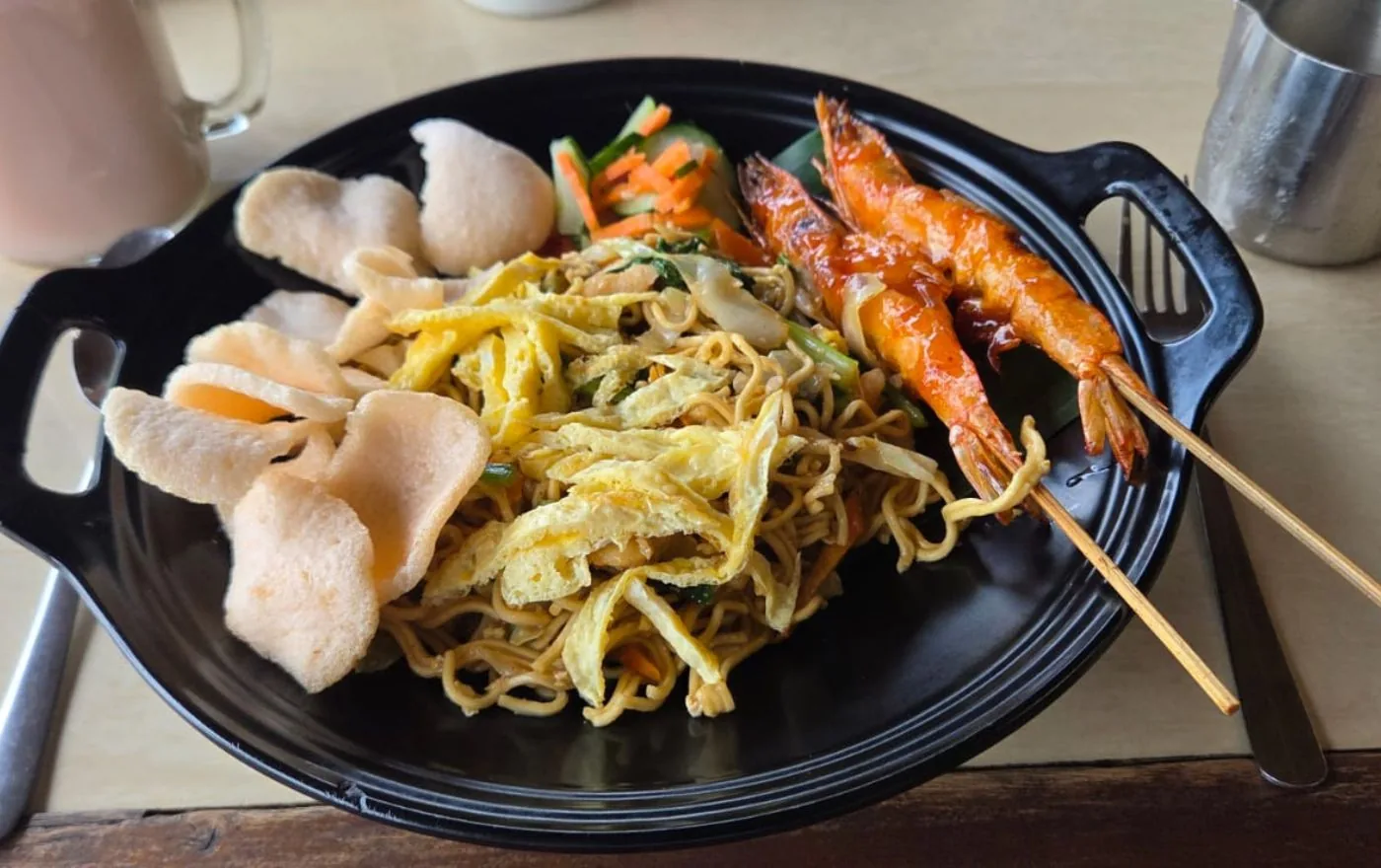
Mie Goreng with stir fried noodles, a shrimp skewer, and fresh garnishes
Lawar is one of the most ancient and authentically Balinese dishes you can try. It is a finely chopped mixture of vegetables, grated coconut, minced meat, and a rich blend of spices that creates a flavor profile unlike anything in Western cuisine. The combination of fresh coconut, aromatic spices, and finely textured ingredients produces a dish that is simultaneously earthy, fragrant, and deeply satisfying.
Several types of Lawar exist across the island. Lawar Merah (red Lawar) is the most traditional version and includes animal blood as an ingredient. Lawar Putih (white Lawar) skips the blood and is milder in flavor. Vegetable versions are also widely available. Lawar is an essential part of any Balinese ceremonial feast and is usually served as a side dish alongside rice and Babi Guling. If you want to taste something that is uniquely and unmistakably Balinese, this is it.
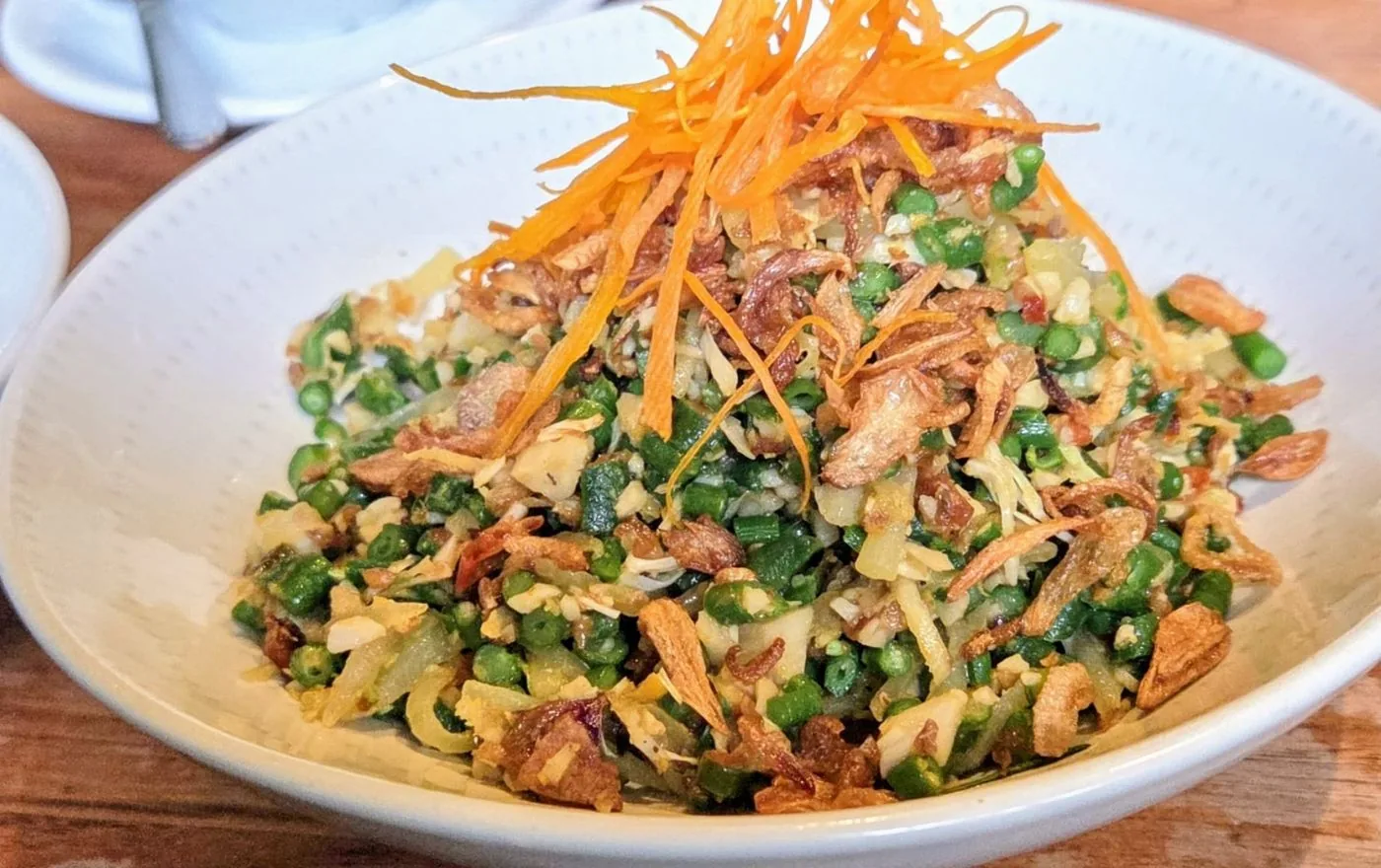
Lawar, a traditional Balinese salad of grated coconut, vegetables, and fragrant spices
While regular satay uses chunks of meat on a skewer, Sate Lilit takes an entirely different approach. Minced chicken is mixed with grated coconut, coconut milk, kaffir lime leaves, and a fragrant spice paste, then the mixture is carefully wrapped by hand around lemongrass sticks or flat bamboo skewers. The lemongrass infuses the meat with a subtle citrus aroma as it grills, adding a layer of flavor that makes this satay truly special.
This is a distinctly Balinese creation that you will not find anywhere else in Indonesia. The texture is softer and more delicate than regular satay, and the coconut gives it a richness that pairs beautifully with the smoky char from the grill. Chicken Sate Lilit is the most popular version, and the minced meat holds the spice paste throughout every bite instead of just sitting on the surface. It is available at traditional warungs and upscale restaurants alike, and it is one of the dishes that best represents the creativity and uniqueness of Balinese cooking.
Look for Sate Lilit made with lemongrass sticks instead of bamboo skewers. The lemongrass adds a citrus perfume to the chicken that bamboo simply cannot match. Your driver will know which warungs still prepare it the traditional way.
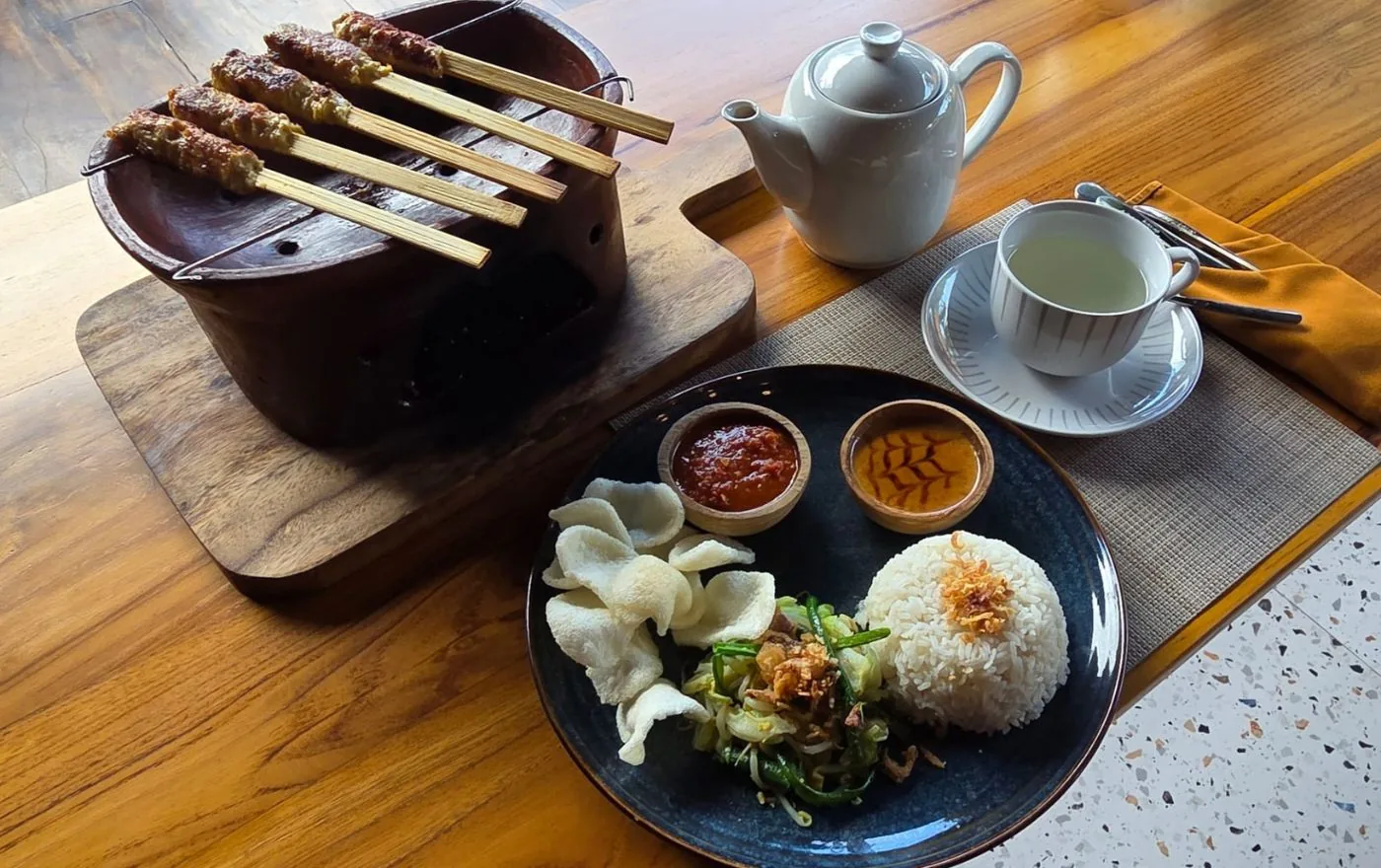
Chicken Sate Lilit, hand wrapped around lemongrass sticks and grilled over charcoal
Sate Babi is a dish you can only find in Bali, and that alone makes it worth seeking out. Because Bali is a Hindu island in a predominantly Muslim country, pork is celebrated here in ways you will not encounter anywhere else in Indonesia. Tender pieces of marinated pork are threaded onto bamboo skewers and grilled over glowing charcoal until the edges caramelize and the fat renders into each smoky, savory bite.
The skewers are served with a rich, spicy peanut sauce that balances sweetness, heat, and nuttiness in perfect proportion. Alongside the satay you will usually find steamed rice, pickled vegetables, and sambal for extra heat. The pork itself is often marinated in a mixture of sweet soy sauce, garlic, and ground coriander before grilling, which gives it a depth of flavor that chicken satay simply cannot match.
Sate Babi is a true Balinese specialty and a reminder that this island has its own culinary identity, shaped by Hindu traditions that set it apart from the rest of the archipelago. Ask your driver to take you to a local spot where the satay is grilled fresh to order.
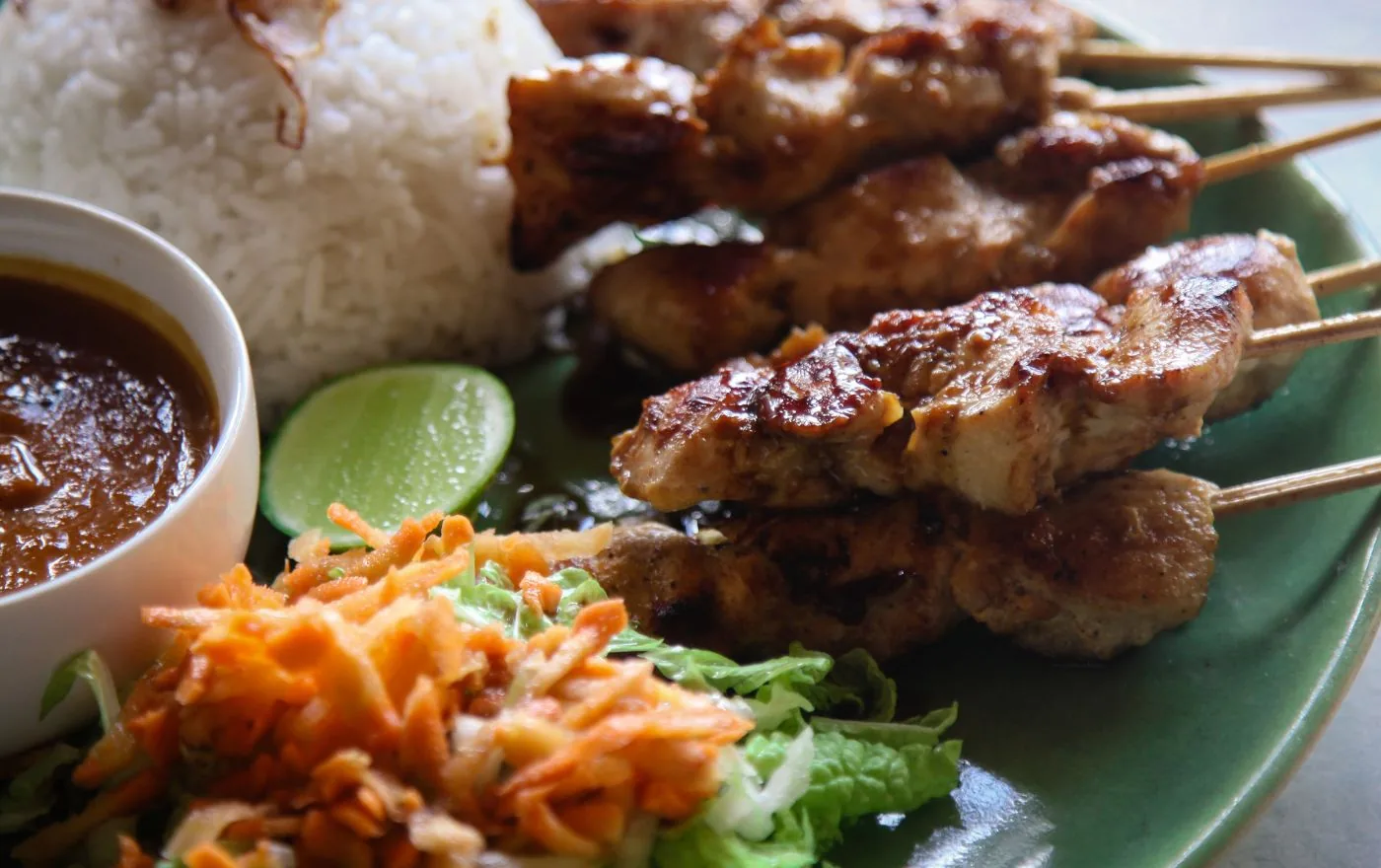
Sate Babi, grilled pork satay skewers with rich peanut sauce on the side
Gado Gado is a vibrant, colorful plate of steamed and raw vegetables, firm tofu, crispy tempeh, a hard boiled egg, and a generous scattering of fried shallots, all drenched in a thick, creamy peanut sauce with a hint of sweetness and a gentle chili heat. It is healthy, filling, and bursting with flavor in every bite.
This is the perfect option for vegetarian travelers or anyone who simply loves bold, well balanced flavors. Every warung makes their peanut sauce a little differently, so the dish tastes unique wherever you try it. Some versions are sweeter, some are spicier, and some have a tangier edge from tamarind or lime. Gado Gado proves that vegetarian food in Bali is never boring. It is one of the most satisfying meals you can eat on the island.
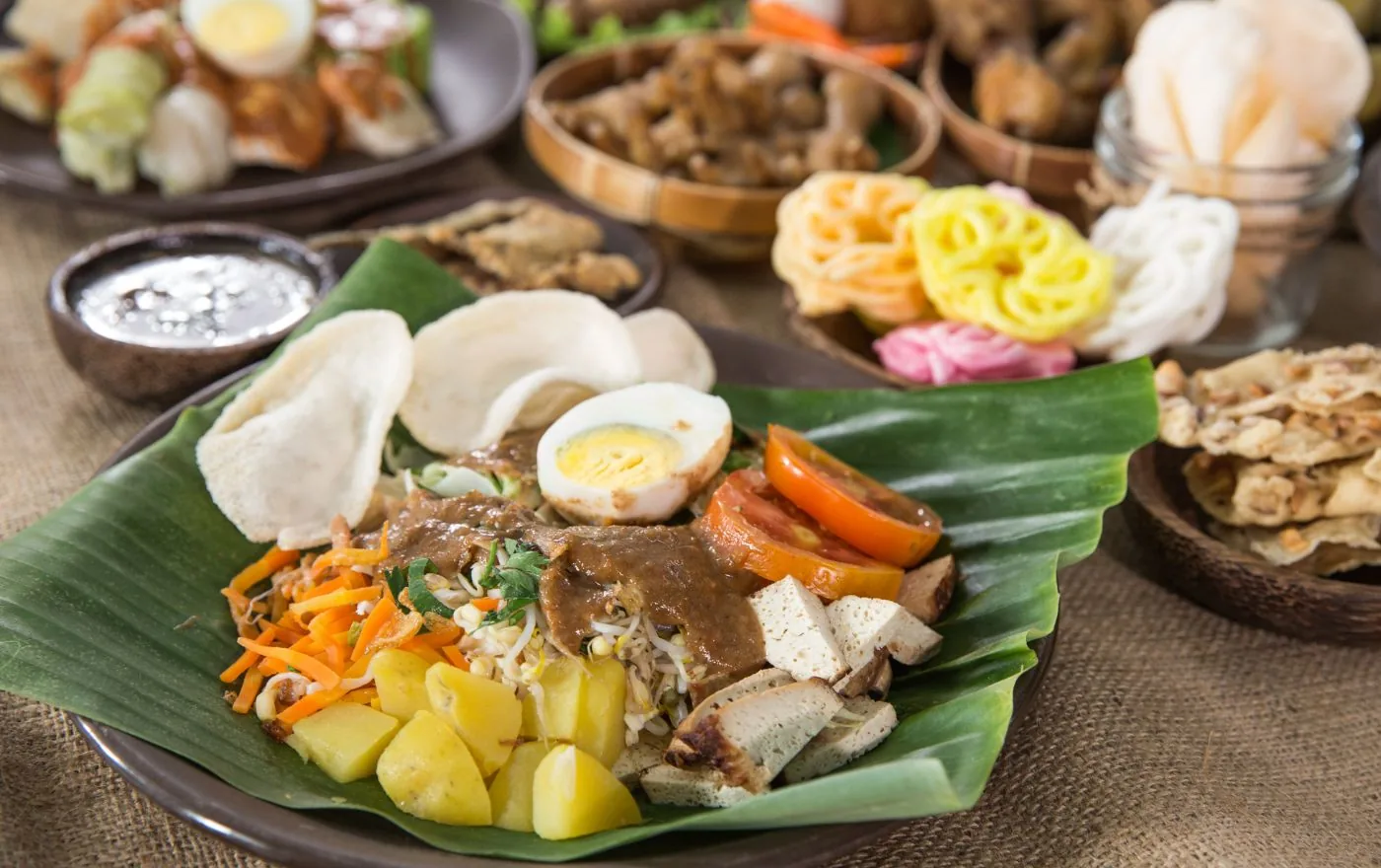
Gado Gado, a colorful plate of vegetables and tofu drenched in creamy peanut sauce
Tempeh is one of Indonesia's greatest contributions to the culinary world, and in Bali it is served in countless ways. The most popular version is Tempe Goreng, where blocks of tempeh are sliced, fried until golden and crunchy on the outside, then glazed or drizzled with a sweet, savory sauce made from kecap manis (sweet soy sauce), garlic, and a touch of chili.
Tempeh itself is made from fermented soybeans that are pressed into firm, nutty cakes. The fermentation process gives it a rich, earthy flavor and a satisfying chewy texture that absorbs sauces beautifully. It is packed with protein and has been a staple of Indonesian cooking for centuries. When fried, the outside becomes crispy and golden while the inside stays tender and full of that distinctive nutty taste.
Whether served as a side dish with rice, a snack between meals, or the main protein in a vegetarian plate, Tempe Goreng is a dish that everyone should try at least once. It is simple, affordable, and available at virtually every warung on the island.
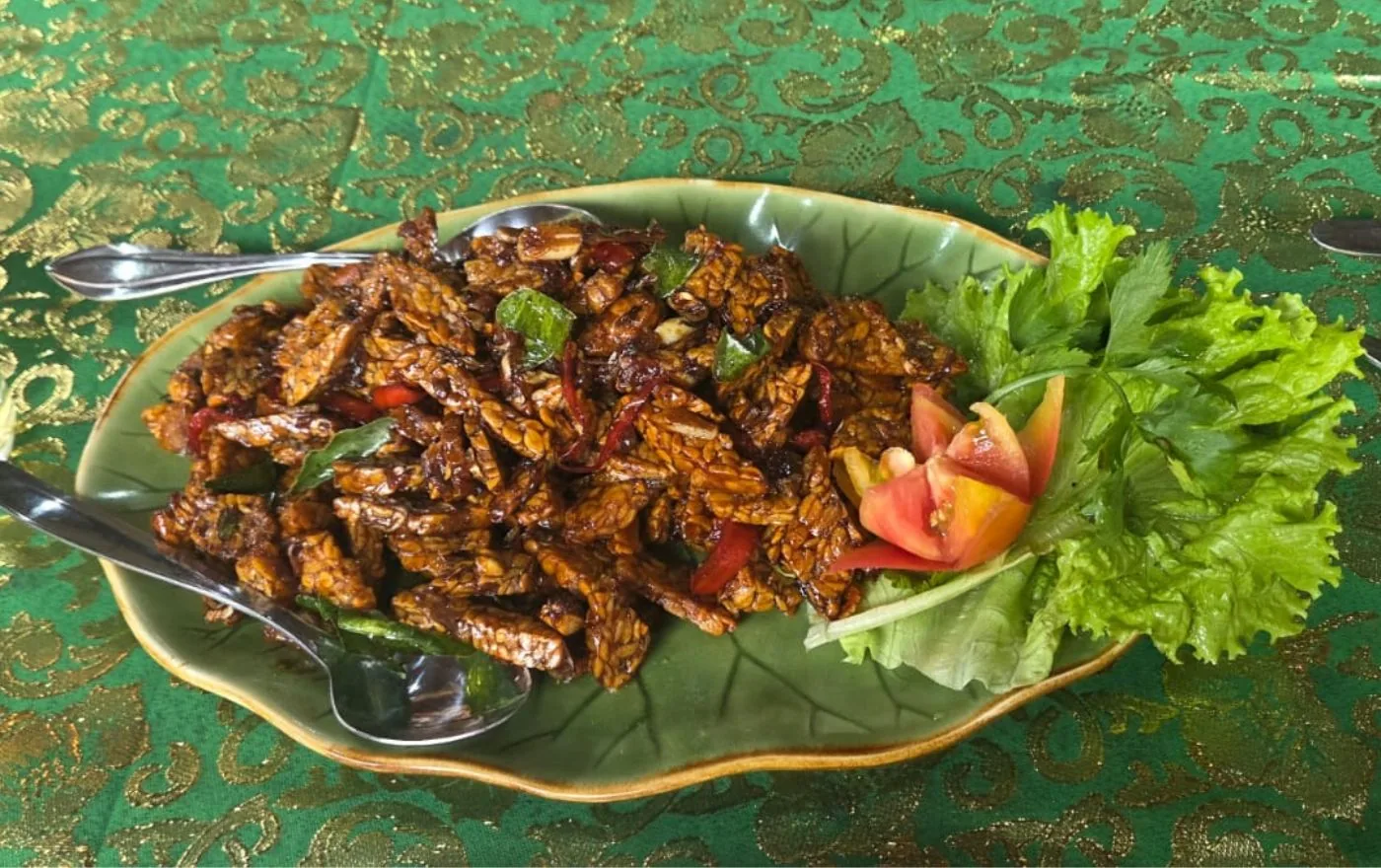
Tempe Goreng, golden fried tempeh glazed with a sweet and savory sauce
Bali is an island surrounded by rich fishing waters, and Ikan Goreng showcases the freshest catch in the most flavorful way possible. A whole fish or generous fillet is marinated in turmeric and spices, then fried until the skin turns crispy and golden while the flesh stays moist and flaky inside. The fish is then topped with a fiery, aromatic sauce made from ground peanuts, chili, garlic, and shallots that brings together crunch, heat, and nuttiness in one unforgettable combination.
What makes the Balinese version special is the accompaniments. The dish is typically served alongside sauteed spinach or water spinach (kangkung), steamed rice, and a generous spoonful of sambal. The peanut sauce adds a richness that complements the delicate fish perfectly, and the fresh greens provide a light, refreshing contrast to the crispy, spice laden protein.
Ikan Goreng is a staple at coastal warungs and inland restaurants alike. Your driver can take you to spots along the coast where the fish was swimming in the ocean just hours before it arrives on your plate.
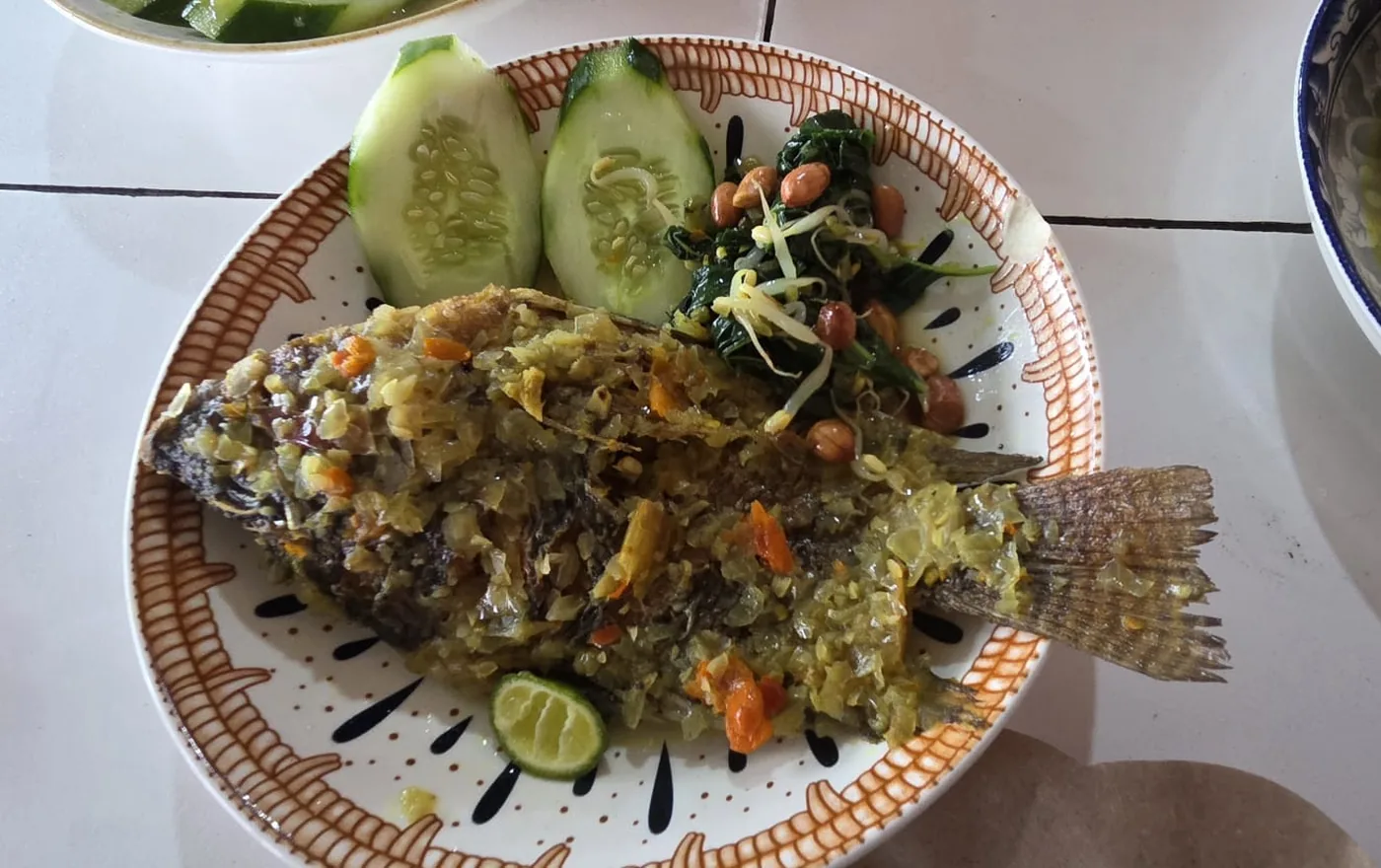
Ikan Goreng, crispy fried fish with spicy peanut sauce and fresh greens
Babi Panggang is another pork dish that you can only truly experience in Bali, where the Hindu culture embraces pork as a central part of the cuisine. These ribs are slow cooked with a fragrant blend of traditional Balinese spices including turmeric, garlic, ginger, galangal, lemongrass, and chili until the meat becomes so tender it practically falls off the bone at the lightest touch.
The slow cooking process allows the spice paste to penetrate deep into the meat, creating layers of flavor that build with every bite. The outside develops a caramelized, slightly charred crust while the inside remains juicy and succulent. The ribs are usually served with steamed rice, a side of fresh vegetables or pickled condiments, and sambal for those who like extra heat.
Like Sate Babi, this is a dish that reflects Bali's unique position as a Hindu island with a pork loving culinary tradition. It is hearty, satisfying, and the kind of meal that makes you want to sit down, slow down, and savor every last bite.
Babi Panggang is best enjoyed for lunch when the meat has been slow cooking since early morning. Ask your driver to stop at a warung known for their pork ribs, and pair it with a cold young coconut for the perfect afternoon meal.
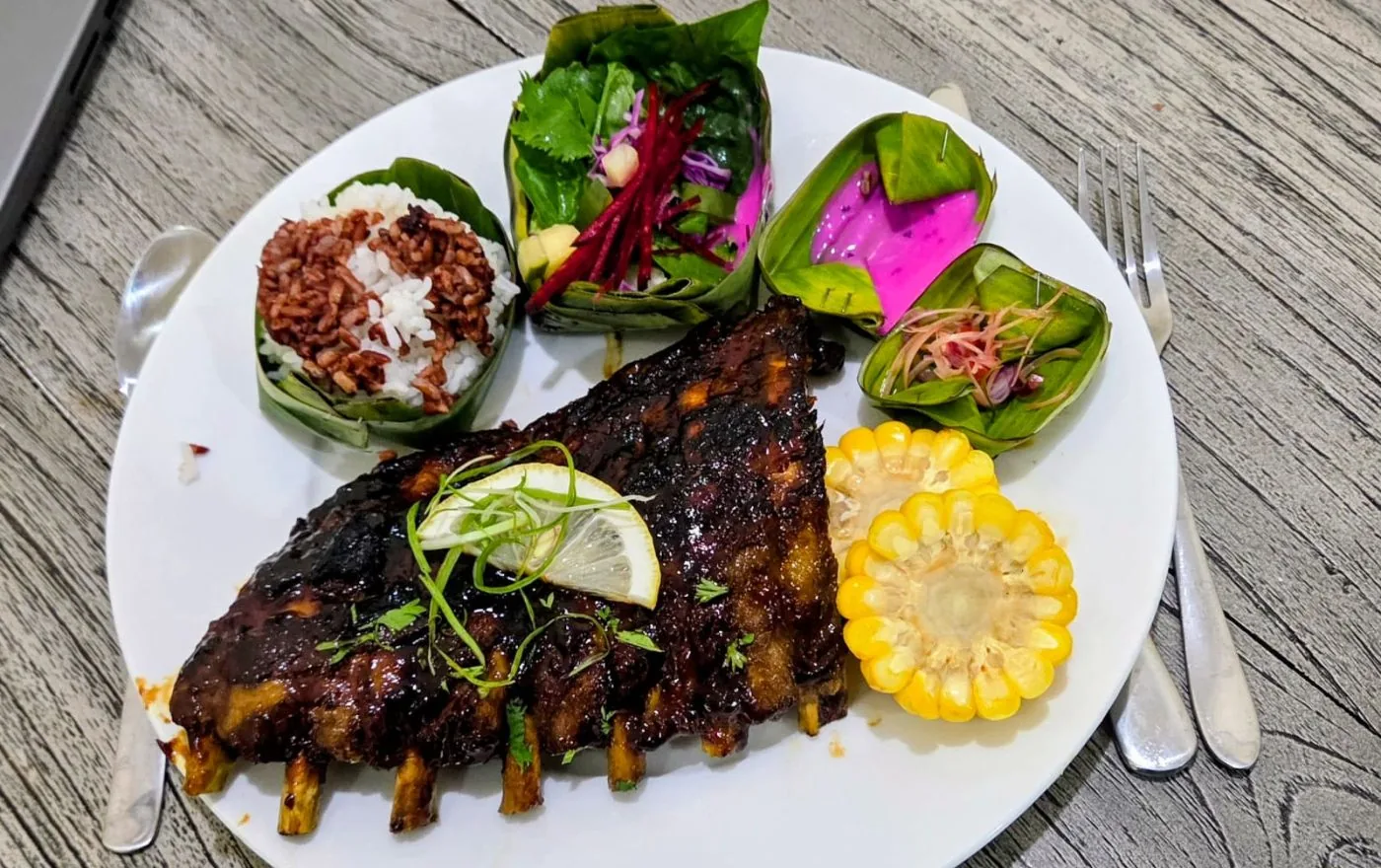
Babi Panggang, tender Balinese pork ribs slow cooked with aromatic spices
No meal in Bali is complete without something sweet. These four traditional desserts showcase the island's love of coconut, banana, pandan, and palm sugar in ways that are simple, satisfying, and completely unforgettable.
Every great meal deserves a great ending, and in Bali that ending is almost always Pisang Goreng. Ripe bananas are coated in a light, crispy batter and deep fried until golden and shatteringly crunchy on the outside while warm and caramelized on the inside. Some versions are drizzled with honey or chocolate sauce, and upscale restaurants sometimes serve them alongside a scoop of vanilla ice cream.
Pisang Goreng is available at street carts, warungs, and high end restaurants across the island, but the simplest versions are often the most satisfying. The tiny street carts that appear along roadsides in the late afternoon serve them fresh from the fryer, still sizzling, and there is nothing quite like eating one while it is still hot enough to burn your fingers. It is the kind of snack that costs almost nothing but delivers pure happiness.
The tiny street carts that sell Pisang Goreng serve the best ones. Your driver will spot them along the road and can pull over whenever you see one that looks good.
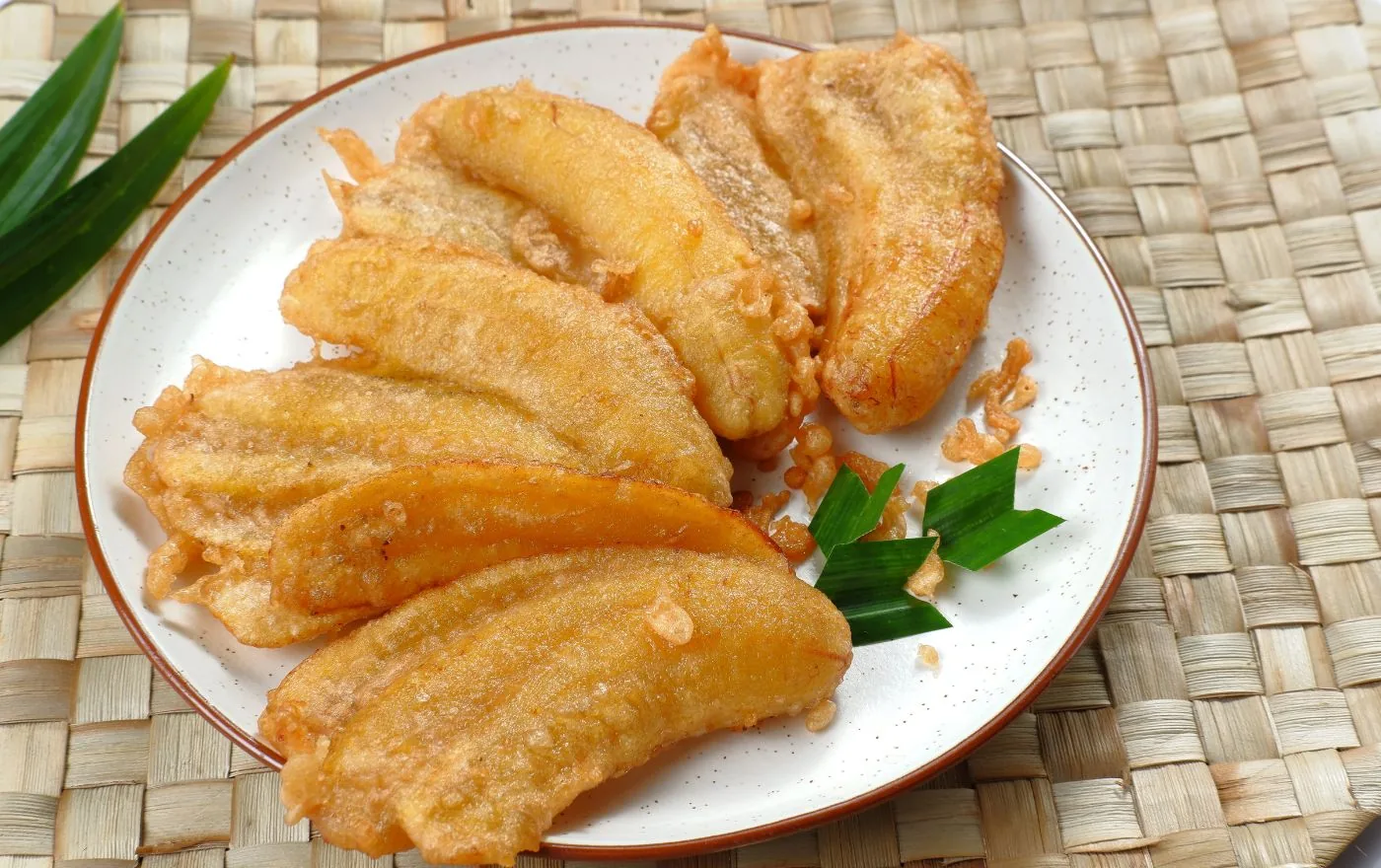
Pisang Goreng, golden fried bananas that are crispy on the outside and caramelized inside
Pisang Molen is the elegant cousin of Pisang Goreng, and it takes the simple combination of banana and fried dough in a completely different direction. Ripe, sweet bananas are carefully wrapped in thin sheets of pastry dough, then fried until the outer layers become flaky, golden, and shatteringly crispy. The banana inside softens into a warm, caramelized filling that melts against the crunchy pastry shell with every bite.
Unlike the batter coated Pisang Goreng, the pastry wrapper gives Pisang Molen a lighter, more refined texture that is closer to a spring roll or a puff pastry turnover. The layers of dough create air pockets that add crunch without heaviness, making it easy to eat two or three without feeling weighed down. It is a popular afternoon snack sold at bakeries, street vendors, and market stalls all over Bali.
Pisang Molen is the kind of simple, perfectly executed snack that reminds you great food does not need to be complicated. It just needs good bananas, thin pastry, and a cook who knows exactly when to pull them from the oil.

Pisang Molen, sweet bananas wrapped in layers of crispy, flaky pastry
Kue Dadar is one of the most beautiful desserts in Balinese cuisine, and it tastes every bit as good as it looks. A thin, delicate crepe is made from rice flour tinted a vivid green by fresh pandan leaf juice, then filled with a generous mound of sweetened grated coconut cooked with palm sugar until it turns sticky, fragrant, and deeply caramelized. The crepe is rolled or folded around the filling, creating a neat little parcel of tropical sweetness.
The pandan gives the crepe a subtle, floral aroma that is unlike anything in Western baking, while the palm sugar coconut filling has a rich, almost toffee like quality that balances the lightness of the wrapper. The bright green color comes entirely from natural pandan extract, not artificial dye, and it makes these little pancakes instantly recognizable at any market or bakery display.
Kue Dadar is typically served as a snack or dessert and is commonly found at morning markets, traditional bakeries, and ceremonial feasts. It is light enough to enjoy after a big meal but sweet enough to satisfy any craving for something indulgent.
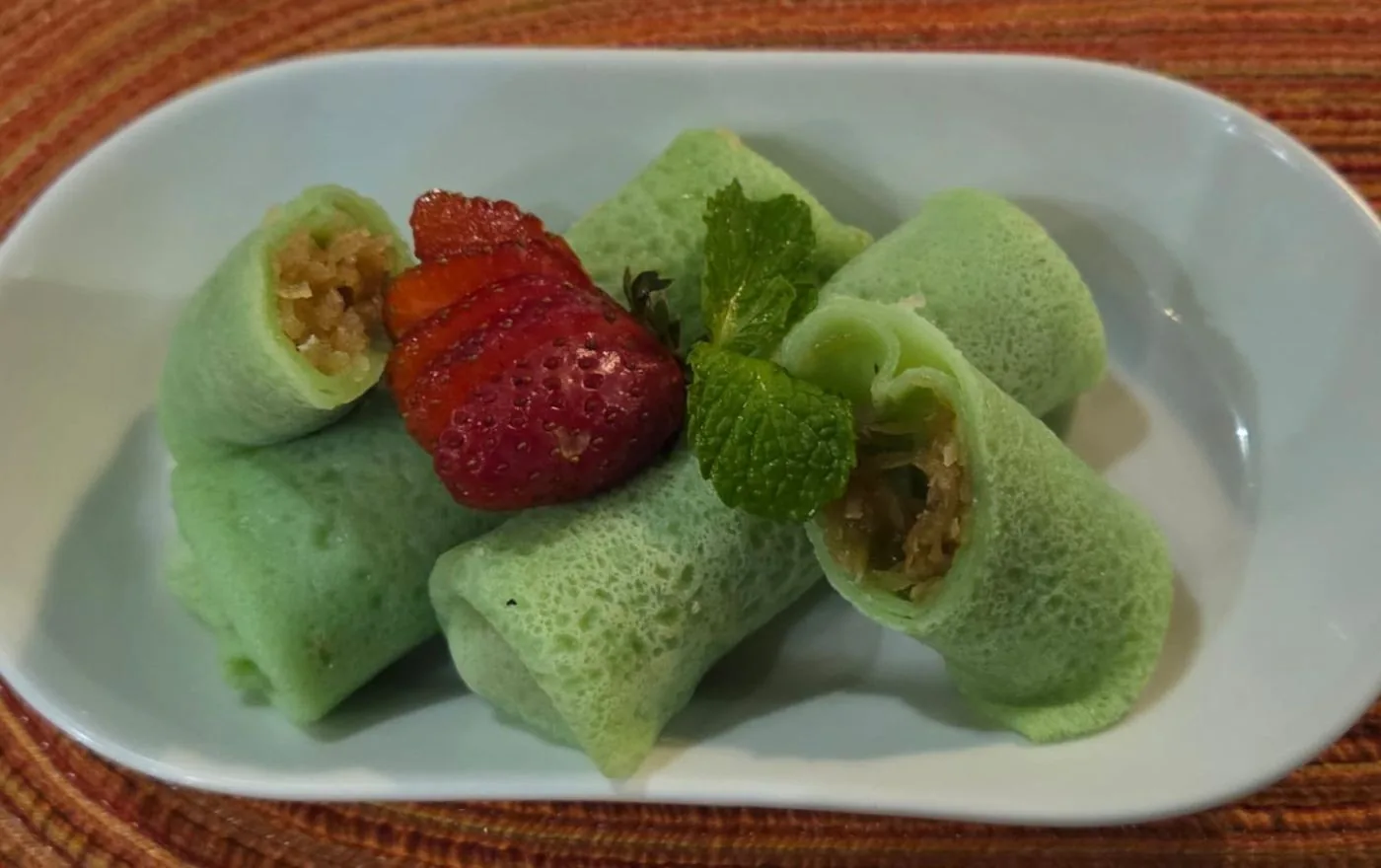
Kue Dadar, green pandan crepes filled with sweet coconut and palm sugar
Bubur Injin is the dessert that captures the essence of Balinese sweetness in a single bowl. Black glutinous rice is slow cooked with pandan leaves and palm sugar until it becomes thick, creamy, and porridge like, with a natural purple hue that deepens as it cooks. The pudding is served warm in a bowl and crowned with a generous pour of cold, thick coconut milk that creates a beautiful contrast of temperatures and textures.
The black rice has a distinctive nutty, slightly earthy flavor that you will not find in any other grain, and the slow cooking process brings out a natural sweetness that pairs perfectly with the rich coconut milk and the caramel notes of the palm sugar. Sliced ripe banana is often added on top, bringing a soft, fruity sweetness that rounds out every spoonful.
Bubur Injin is traditionally served warm, making it especially comforting on a cool evening in the Bali highlands or after a long day of sightseeing. It is the kind of dessert that feels nourishing and indulgent at the same time, and it is a beautiful way to end any Balinese meal.
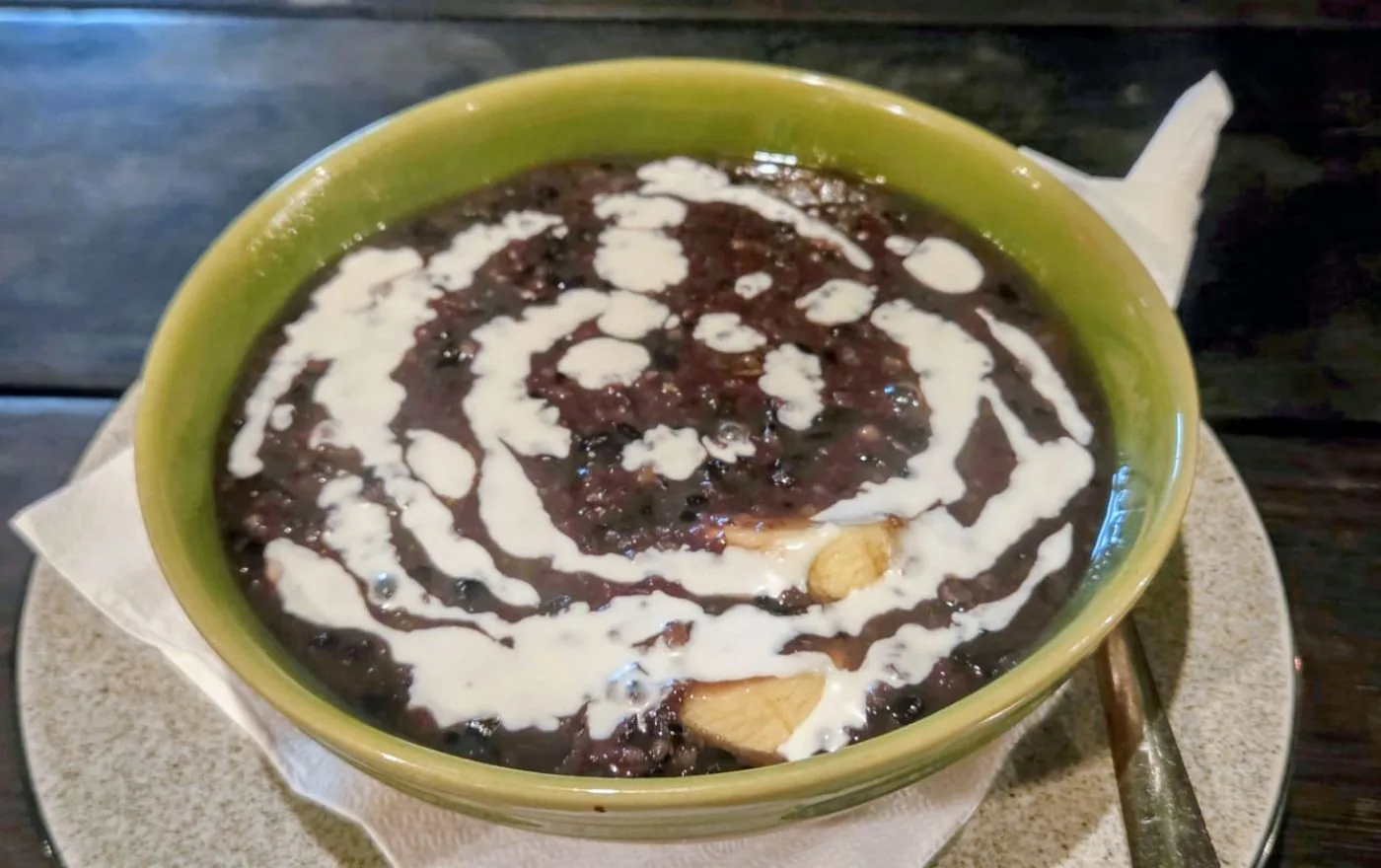
Bubur Injin, creamy black rice pudding with coconut milk and sliced banana
The best food in Bali is not in tourist restaurants. Here is how to find it.
Balinese food is one of the most underrated cuisines in Southeast Asia. While most visitors come for the beaches and temples, the food alone is worth the trip. From the shattering crispy skin of Babi Guling to the creamy warmth of Bubur Injin, these 15 dishes represent the full range of what Balinese cooking has to offer. The best way to experience it is to skip the tourist restaurants and eat where the locals eat. Travel with a local driver who grew up on this food, and you will discover warungs, night markets, and roadside stalls that serve meals you will never forget.
Your driver did not learn about Balinese food from a guidebook. They grew up eating it. They know which warung makes the best Babi Guling, which night market has the freshest Sate Lilit, where to find the crispiest Bebek Goreng, and which roadside cart serves Pisang Goreng that will change your life. Travel with someone who lives and breathes this food, and every meal becomes an unforgettable experience.
Book Your Bali Food Tour →