Traditional Balinese Recipes You Can Make at Home

You fell in love with the flavors of Bali, and now you want to recreate them in your own kitchen. These 15 simplified home recipes capture the soul of Balinese cooking with ingredients you can find at your local Asian grocery store.

Bring the Flavors of Bali Into Your Own Kitchen

Simplified Home Versions of Authentic Dishes

Balinese cooking at its core is about fresh spices, bold flavors, and techniques that have been passed down through generations. While nothing truly replaces the experience of eating these dishes at a warung in Bali, these simplified home versions capture the essential flavors and spirit of each recipe. The spice pastes have been adapted for a food processor instead of a traditional stone mortar, cooking times have been adjusted for home ovens and stovetops, and hard to find ingredients come with practical substitutions wherever possible.

Finding the Right Ingredients

Most of the ingredients in these recipes can be found at Asian grocery stores, which carry staples like kecap manis (sweet soy sauce), fresh galangal, lemongrass, kaffir lime leaves, pandan leaves, shrimp paste, and palm sugar. Many of these items are also available frozen, which works perfectly well. Online specialty shops are another great option for stocking your Balinese pantry, and the Essential Balinese Pantry section at the bottom of this page covers everything you need to get started.

Want to Know More About These Dishes?

These recipes are the companion to our complete food guide. Want to know more about these dishes and what makes them special? Read our complete guide to 15 Balinese Dishes You Have to Try. And if you ever want to taste the authentic versions prepared by the hands that have been making them for decades, a private driver in Bali will take you to the hidden warungs where these flavors were born.

Babi Guling: Balinese Spiced Roast Pork

The most famous dish in Bali, Babi Guling is a whole suckling pig roasted with an incredible spice paste. This home version uses pork belly to capture that same crispy skin and fragrant, spice saturated meat.
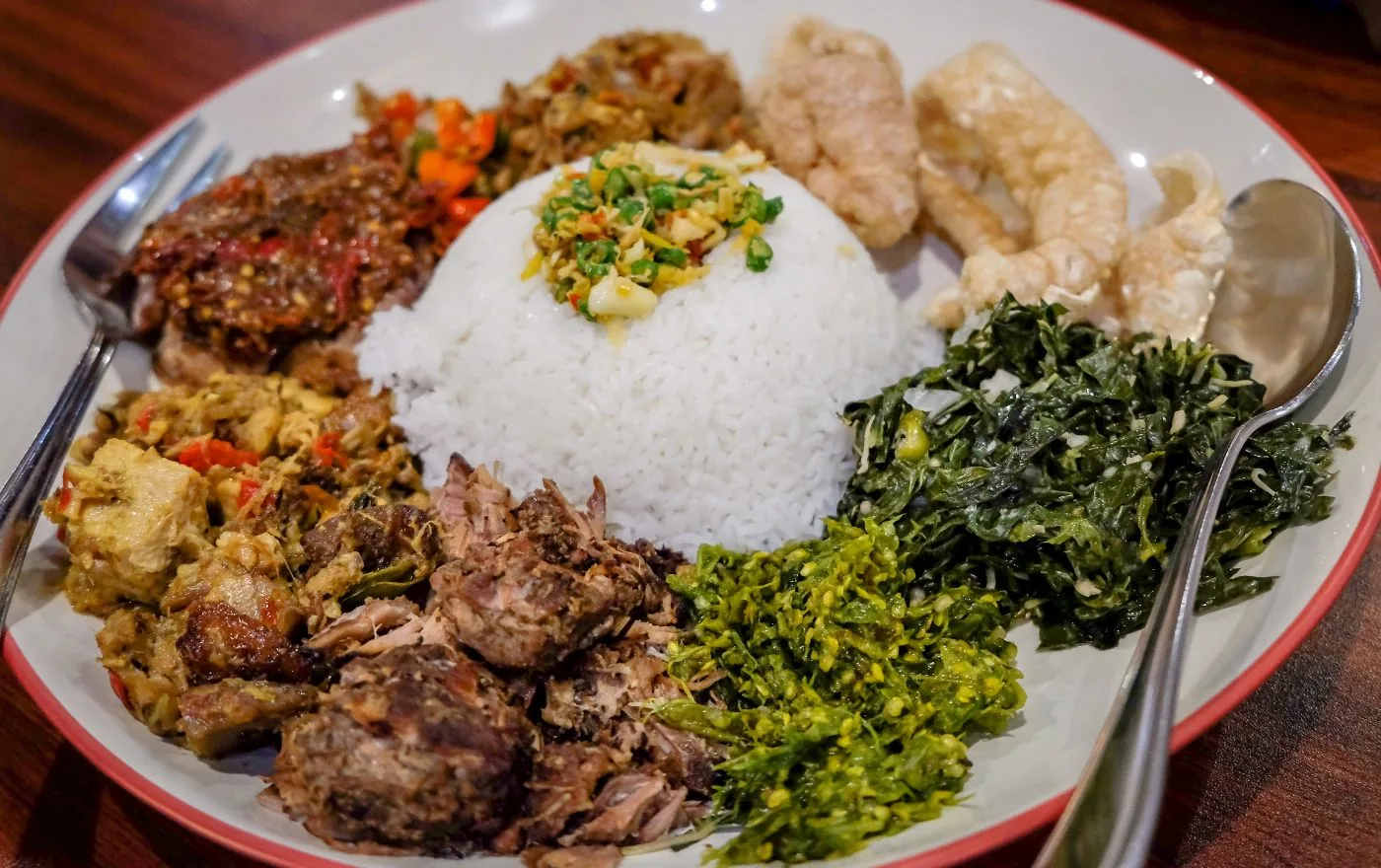
Prep: 30 min Cook: 2.5 hours Serves: 6

Ingredients

  • 1.5 kg (3.3 lb) pork belly, skin on and scored
  • 2 tablespoons coconut oil
  • 2 stalks lemongrass, white part only, chopped
  • 6 shallots, roughly chopped
  • 6 cloves garlic
  • 4 cm (1.5 in) fresh turmeric, or 2 teaspoons ground turmeric
  • 3 cm (1 in) fresh galangal, or 2 teaspoons ground galangal
  • 3 cm (1 in) fresh ginger
  • 4 red chilies, seeded for less heat
  • 1 tablespoon coriander seeds, toasted
  • 1 teaspoon black pepper
  • 1 teaspoon salt
Babi Guling Balinese roast pork with crispy golden skin and aromatic spice paste

Babi Guling, Bali's signature roast pork with shatteringly crispy skin

Instructions

  1. Blend all the spice paste ingredients together in a food processor until you have a smooth, vibrant paste. Add a splash of coconut oil to help it come together.
  2. Pat the pork belly completely dry with paper towels. Rub the spice paste generously all over the meat side, working it into every score mark and crevice. Keep the skin side clean and dry.
  3. Place the pork belly skin side up on a wire rack set over a roasting tray. Rub the skin with a little salt and leave it uncovered in the fridge for at least 2 hours, or overnight for the crispiest results.
  4. Preheat your oven to 220C (425F). Roast the pork for 30 minutes until the skin starts to blister and crackle.
  5. Lower the heat to 160C (325F) and continue roasting for another 2 hours, until the meat is completely tender and the skin is golden and shattering crispy.
  6. Let the pork rest for 15 minutes, then slice and serve with steamed rice, a simple lawar salad, and your favorite sambal on the side.
Kitchen Tip

The secret to crispy skin is a completely dry surface. Pat it dry, salt it, and let it sit uncovered in the fridge overnight. The cold air draws out moisture and gives you that shattering crackle straight from the oven.

Bebek Goreng: Crispy Fried Duck

This Balinese crispy duck gets its incredible texture from a two step process: braising until tender, then frying until golden. The result is impossibly crunchy skin with juicy, spice saturated meat inside.
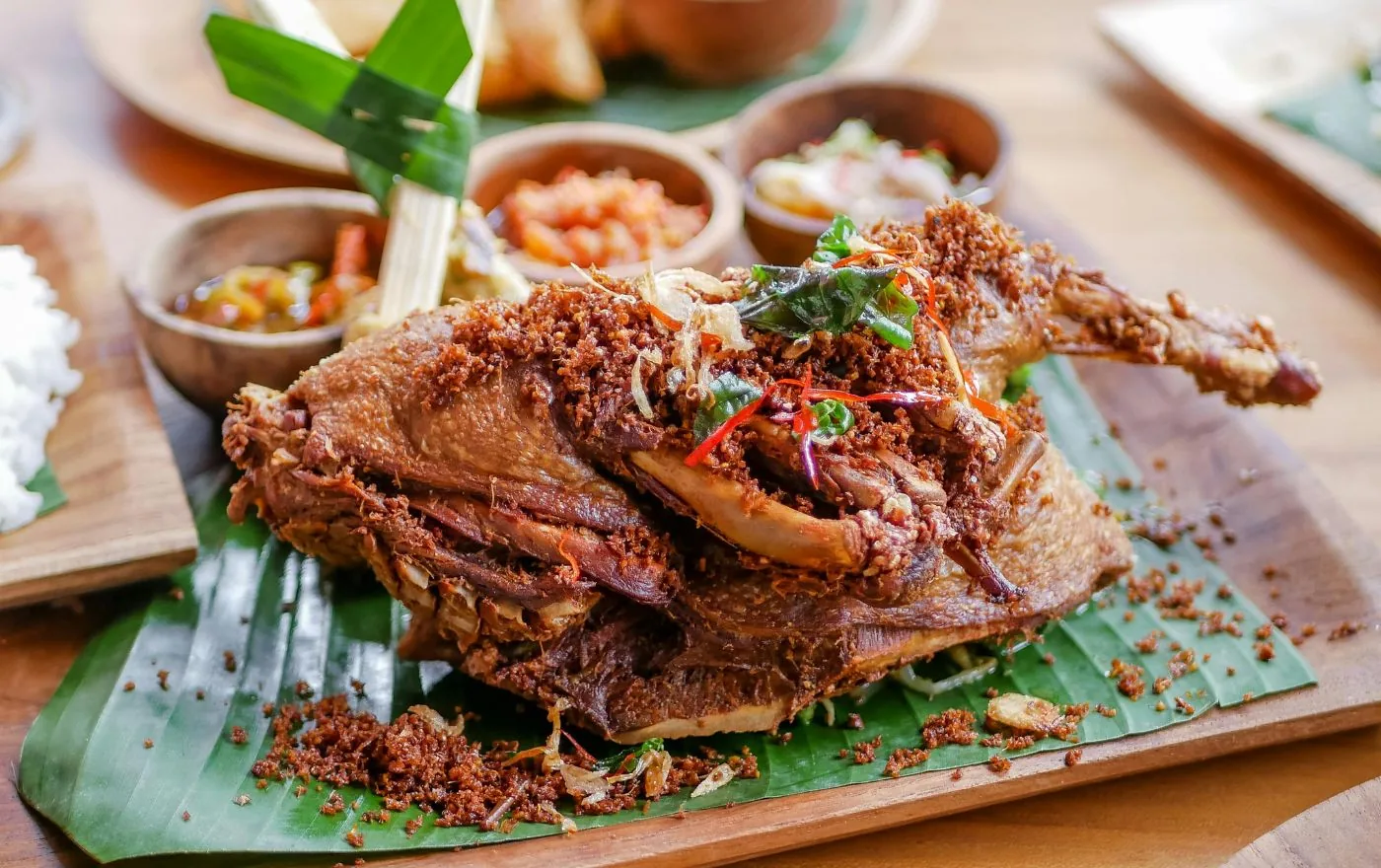
Prep: 20 min Cook: 2 hours Serves: 4

Ingredients

  • 4 duck legs (thigh and drumstick)
  • 2 teaspoons ground turmeric
  • 6 cloves garlic, minced
  • 3 cm (1 in) fresh ginger, grated
  • 1.5 teaspoons salt
  • 1 teaspoon white pepper
  • 2 stalks lemongrass, bruised
  • 3 kaffir lime leaves
  • 500 ml (2 cups) water
  • Vegetable oil for deep frying

For Serving

  • Steamed rice
  • Sambal matah (sliced shallots, lemongrass, chili, lime juice, coconut oil)
  • Steamed or stir fried vegetables
Bebek Goreng crispy fried duck Balinese style served with rice and sambal matah

Bebek Goreng, crispy fried duck with golden skin and tender spiced meat

Instructions

  1. Rub the duck legs all over with turmeric, garlic, ginger, salt, and white pepper. Let them marinate for at least 30 minutes, or cover and refrigerate overnight for deeper flavor.
  2. Place the marinated duck in a large pot with the lemongrass, kaffir lime leaves, and water. Bring to a gentle simmer, cover, and braise for about 1.5 hours until the meat is completely tender and almost falling off the bone.
  3. Remove the duck legs carefully and pat them very dry with paper towels. This step is important for achieving crispy skin, so take your time and get them as dry as possible.
  4. Heat enough vegetable oil for deep frying to 180C (350F). Carefully lower the duck legs into the hot oil and fry for about 8 to 10 minutes, turning occasionally, until the skin is deep golden and shatteringly crispy all over.
  5. Drain on paper towels and serve immediately with steamed rice, sambal matah, and vegetables on the side.

Nasi Goreng: Classic Indonesian Fried Rice

The national dish of Indonesia, Nasi Goreng is fried rice elevated to an art form. The secret is day old rice, a screaming hot wok, and the unmistakable sweetness of kecap manis.
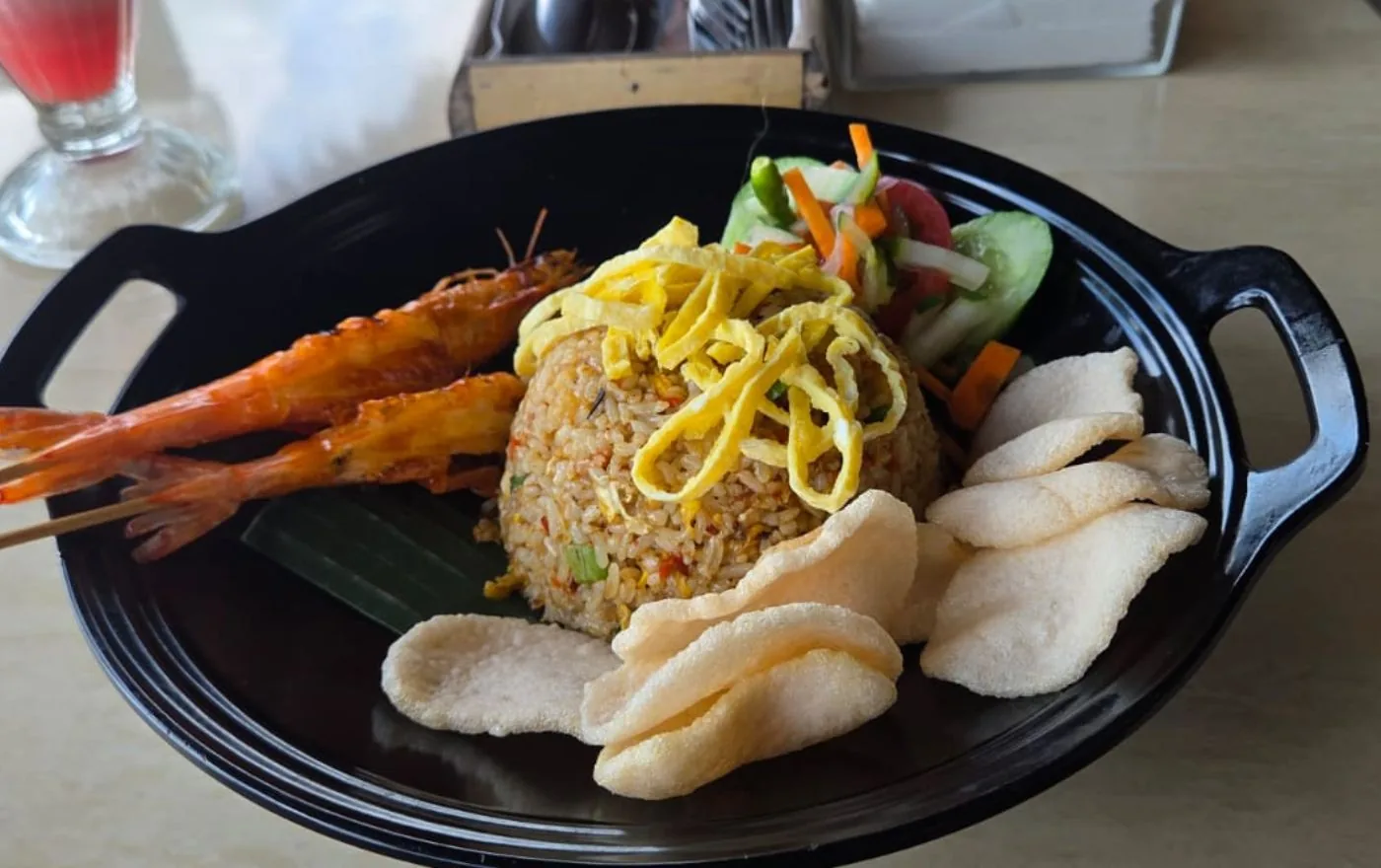
Prep: 15 min Cook: 10 min Serves: 2

Ingredients

  • 400 g (about 3 cups) day old cooked rice, cold from the fridge
  • 150 g (5 oz) prawns, peeled, or diced chicken
  • 3 tablespoons kecap manis (sweet soy sauce)
  • 1 tablespoon soy sauce
  • 4 shallots, thinly sliced
  • 3 cloves garlic, minced
  • 2 red chilies, sliced (adjust to taste)
  • 1 teaspoon shrimp paste (terasi), optional
  • 2 eggs
  • 2 tablespoons vegetable oil
  • Salt to taste

For Topping

  • Fried eggs (one per serving)
  • Crispy fried shallots
  • Prawn crackers (kerupuk)
  • Sliced cucumber
Nasi Goreng Indonesian fried rice with prawns, fried egg, and kerupuk

Nasi Goreng, classic fried rice with a shrimp skewer and all the garnishes

Instructions

  1. Get your wok blazing hot over the highest heat you have. Add the oil and let it shimmer, then toss in the shallots and garlic. Stir fry for about 30 seconds until they turn golden and fragrant.
  2. Add the shrimp paste and chilies, stir frying for another 15 seconds until the raw smell disappears and the whole kitchen starts smelling incredible.
  3. Push everything to one side of the wok and crack the eggs directly into the empty space. Scramble them roughly, then mix everything together.
  4. Add the prawns or chicken and cook until just done, about 2 minutes for prawns or 3 to 4 minutes for chicken.
  5. Throw in all the cold rice at once and break up any clumps with your spatula. Toss and stir fry aggressively, pressing the rice against the hot surface of the wok to get a little char on the grains.
  6. Pour the kecap manis and soy sauce over the rice and keep tossing until every grain is coated and glistening with that beautiful dark glaze.
  7. Plate the rice, top with a fried egg, scatter crispy shallots over everything, and serve with kerupuk and cucumber slices on the side.
Kitchen Tip

Always use cold, day old rice. Freshly cooked rice has too much moisture and will turn your fried rice into a sticky, soggy mess. Cook your rice the night before and spread it on a tray in the fridge to dry out.

Mie Goreng: Stir Fried Egg Noodles

The noodle sibling of Nasi Goreng, Mie Goreng uses the same flavor principles but with egg noodles that soak up every bit of that sweet, savory, slightly smoky sauce.
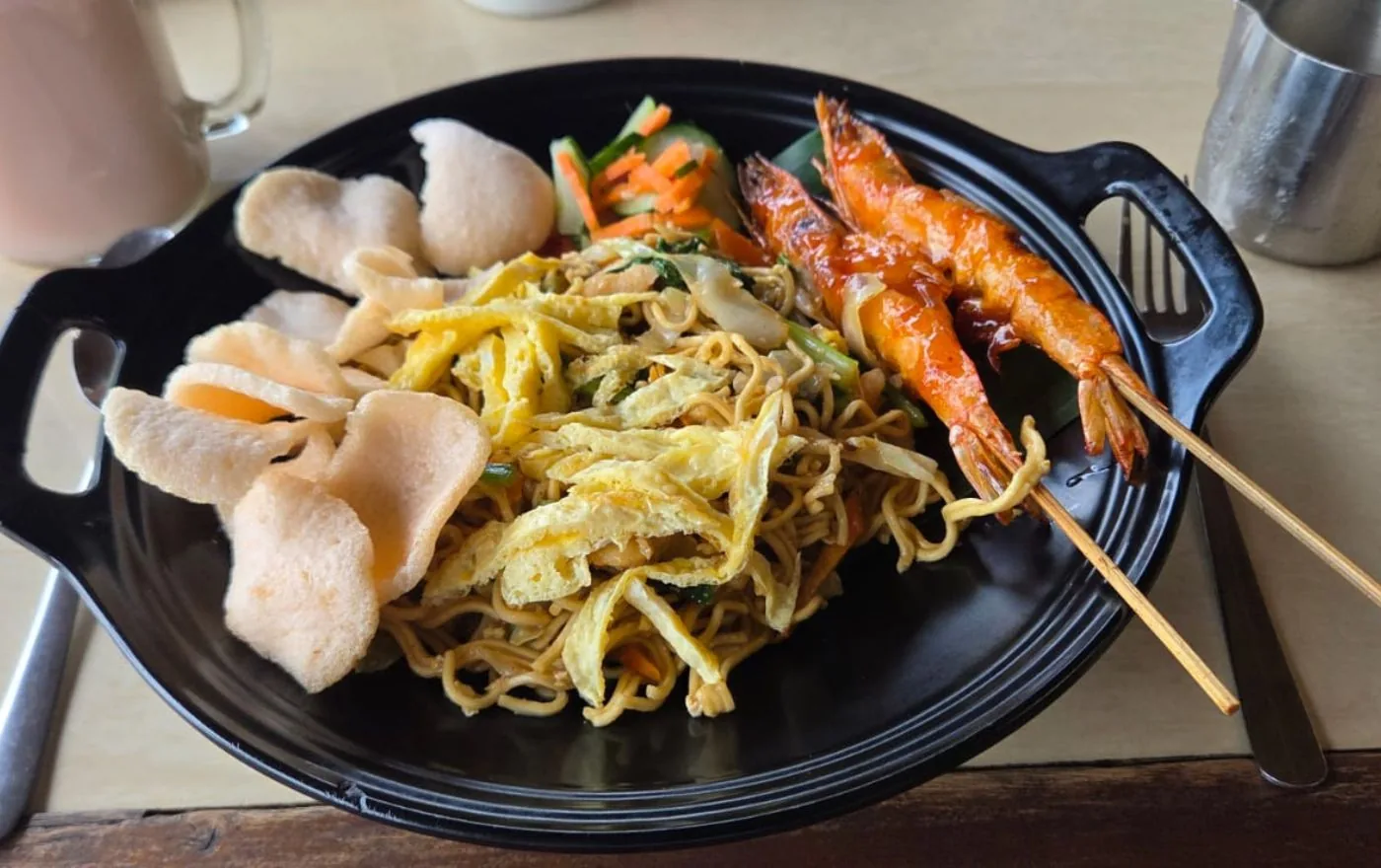
Prep: 15 min Cook: 10 min Serves: 2

Ingredients

  • 300 g (10 oz) fresh egg noodles, or dried egg noodles cooked and drained
  • 150 g (5 oz) prawns or sliced chicken breast
  • 1 cup shredded cabbage
  • 1 carrot, julienned
  • 2 spring onions, cut into 3 cm pieces
  • 4 shallots, thinly sliced
  • 3 cloves garlic, minced
  • 2 red chilies, sliced
  • 3 tablespoons kecap manis
  • 1 tablespoon soy sauce
  • 1 tablespoon oyster sauce
  • 2 tablespoons vegetable oil
  • Salt and white pepper to taste
Mie Goreng stir fried egg noodles with prawns and vegetables

Mie Goreng, stir fried noodles with prawns and fresh vegetables

Instructions

  1. Heat your wok until it is screaming hot. Add the oil, then the shallots and garlic. Stir fry for 20 seconds until fragrant and just starting to turn golden at the edges.
  2. Add the chilies and your protein of choice. Cook until the prawns are pink or the chicken is cooked through, about 2 to 3 minutes.
  3. Toss in the cabbage, carrot, and spring onions. Stir fry for about a minute until the vegetables are just tender but still have a nice crunch to them.
  4. Add the noodles to the wok and use tongs to toss everything together. Pour the kecap manis, soy sauce, and oyster sauce over the noodles and keep tossing until every strand is coated in that glossy, sweet sauce.
  5. Season with salt and white pepper, give it one final toss, and serve immediately with a fried egg on top and kerupuk on the side.

Lawar: Traditional Balinese Coconut Salad

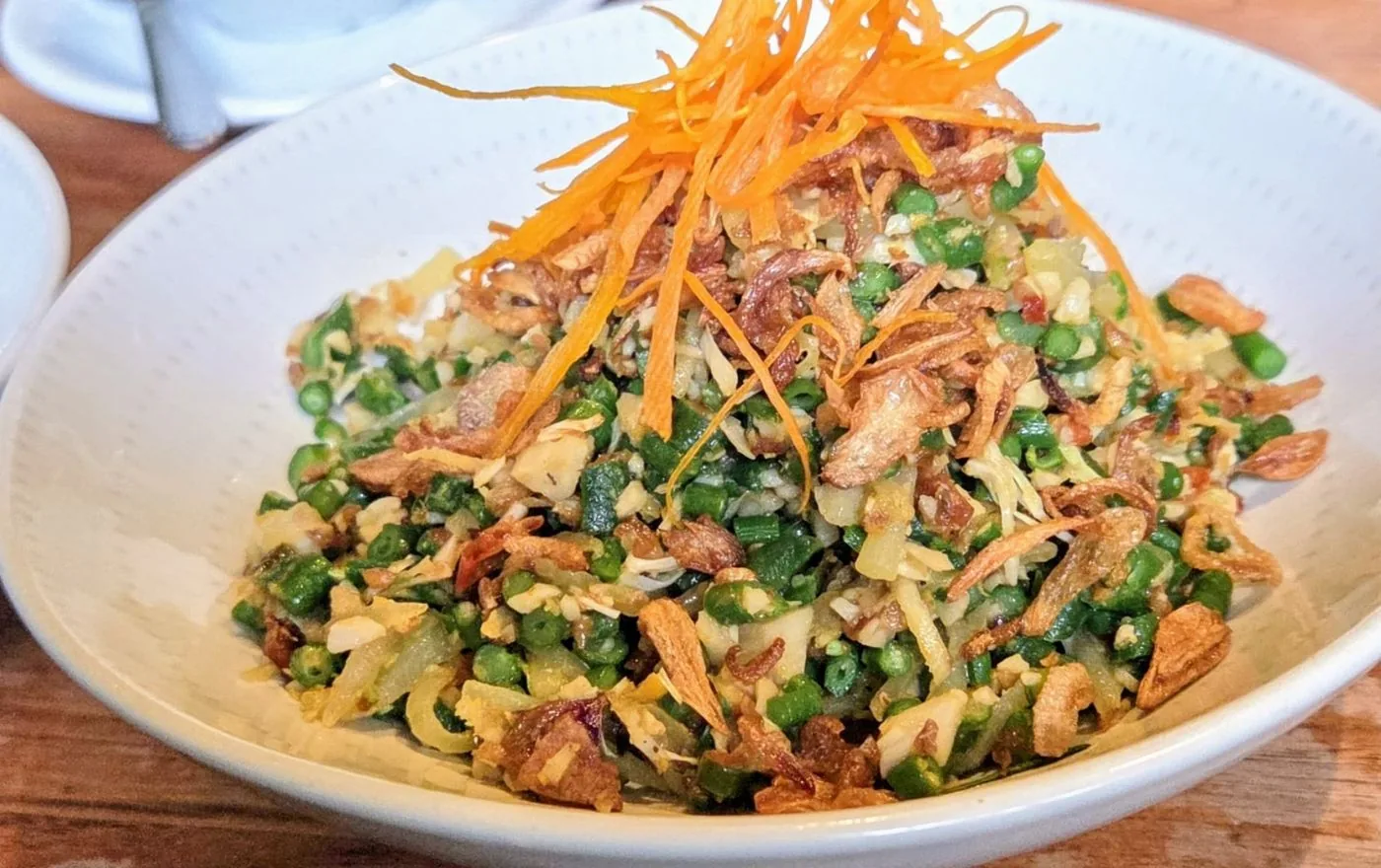
One of the most ancient dishes in Balinese cuisine, Lawar is a fragrant salad of grated coconut, finely chopped vegetables, and minced meat. This home version is fresh, vibrant, and ready in minutes.
Prep: 25 min Cook: 10 min Serves: 4

Ingredients

  • 200 g (7 oz) green beans, finely chopped into small pieces
  • 150 g (5 oz) minced chicken or pork
  • 100 g (3.5 oz) freshly grated coconut, or desiccated coconut rehydrated with a little warm water
  • 4 shallots, finely sliced
  • 3 cloves garlic, minced
  • 2 red chilies, finely sliced
  • 2 kaffir lime leaves, very finely shredded
  • 2 tablespoons coconut oil
  • Juice of 2 limes
  • 1 teaspoon salt
  • 1 teaspoon ground coriander
  • Freshly ground black pepper
Lawar traditional Balinese salad with grated coconut, green beans, and aromatic spices

Lawar, a traditional Balinese salad of grated coconut, vegetables, and fragrant spices

Instructions

  1. Blanch the chopped green beans in boiling salted water for about 2 minutes, then drain and immediately plunge them into ice water to keep that bright green color. Drain well and set aside.
  2. Heat the coconut oil in a pan over medium heat and cook the minced chicken or pork until it is fully cooked through, breaking it up into fine pieces as it cooks. Season with a pinch of salt and the ground coriander.
  3. In a large bowl, combine the blanched green beans, cooked mince, grated coconut, shallots, garlic, chilies, and shredded kaffir lime leaves.
  4. Squeeze the lime juice over everything, season with salt and pepper, and toss it all together gently with your hands until the coconut and spices are evenly distributed through the mixture.
  5. Taste and adjust the seasoning. Lawar should be a balance of savory, fresh, and slightly spicy. Serve immediately alongside rice as a perfect side dish.
Kitchen Tip

Lawar is best eaten fresh within an hour of making it. The lime juice and coconut start to change texture as they sit, so mix it right before you plan to serve. If you cannot find fresh grated coconut, soak desiccated coconut in warm water for 10 minutes, then squeeze out the excess.

Sate Lilit: Balinese Chicken Satay

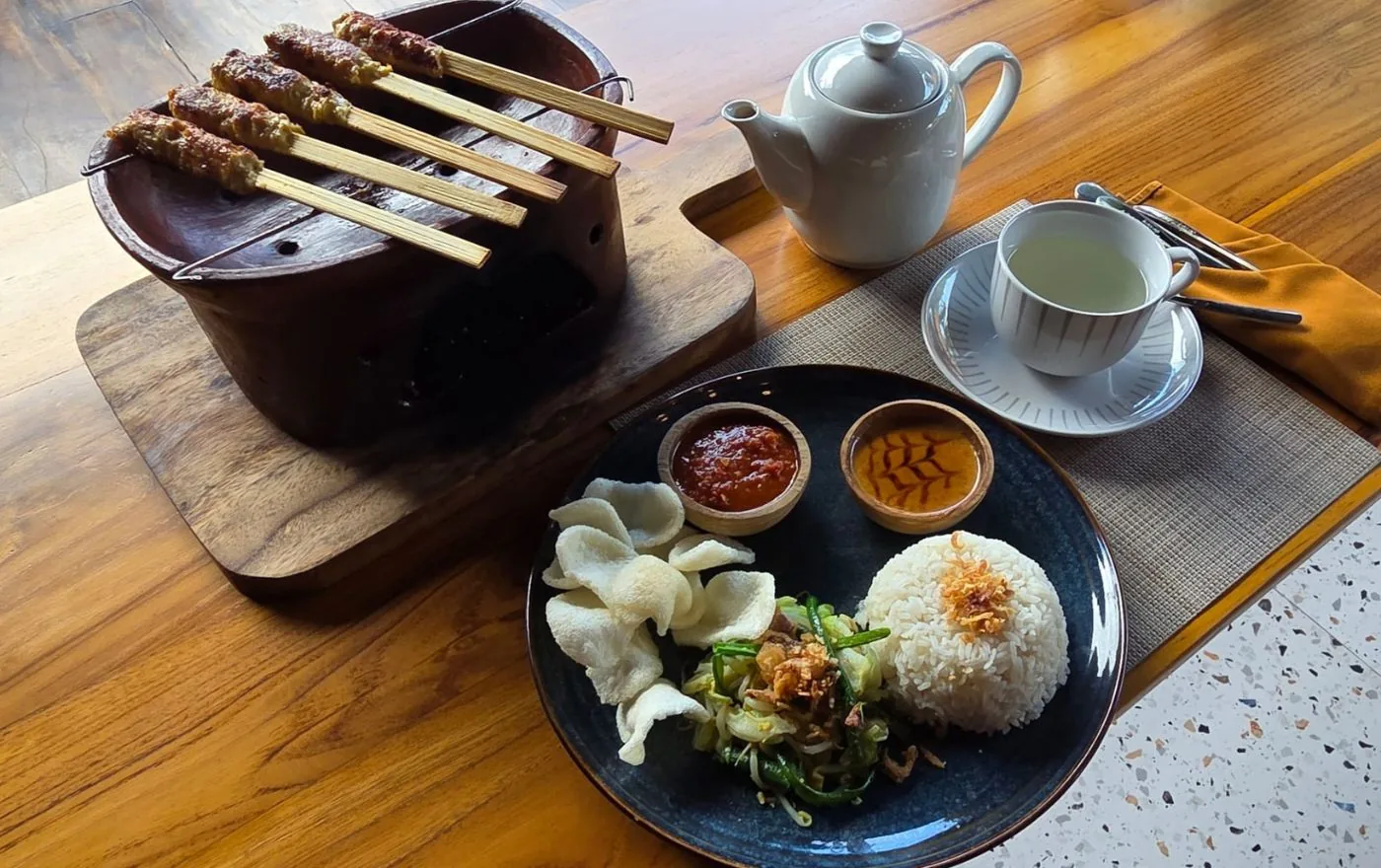
Unlike regular satay, Sate Lilit uses minced chicken mixed with coconut and spices, then wrapped around lemongrass sticks. The lemongrass infuses the meat with a beautiful citrus aroma as it grills.
Prep: 30 min Cook: 15 min Serves: 4

Ingredients

  • 500 g (1 lb) minced chicken
  • 75 g (2.5 oz) freshly grated coconut, or desiccated coconut soaked in 3 tablespoons coconut milk
  • 3 tablespoons coconut milk
  • 4 kaffir lime leaves, very finely shredded
  • 2 stalks lemongrass, white part finely minced (plus 8 whole stalks for skewers)
  • 4 shallots, finely minced
  • 3 cloves garlic, finely minced
  • 2 red chilies, finely minced
  • 1 teaspoon ground coriander
  • 1 teaspoon ground turmeric
  • 1 teaspoon salt
  • 1 teaspoon palm sugar or brown sugar
  • Vegetable oil for grilling
Sate Lilit Balinese chicken satay wrapped around lemongrass sticks on a grill

Chicken Sate Lilit, hand wrapped around lemongrass sticks and grilled over charcoal

Instructions

  1. In a large bowl, combine the minced chicken with all the other ingredients except the lemongrass sticks and oil. Mix everything together thoroughly with your hands until the spices and coconut are evenly distributed through the meat.
  2. Prepare the lemongrass sticks by trimming them to about 15 cm (6 in) and flattening the thick end slightly with the back of a knife. If you cannot find lemongrass sticks, use flat bamboo skewers that have been soaked in water for 30 minutes.
  3. Take a generous handful of the chicken mixture and press it firmly around the thick end of each lemongrass stick, shaping it into a smooth, elongated sausage shape about 8 cm (3 in) long. Wet your hands slightly to prevent sticking.
  4. Heat your grill or a grill pan to medium high heat and brush with a little oil. Place the skewers on the grill and cook for about 4 to 5 minutes on each side, turning carefully, until the chicken is cooked through and you have beautiful char marks on the outside.
  5. Serve the sate lilit hot from the grill with steamed rice and sambal on the side.

Sate Babi: Pork Satay with Peanut Sauce

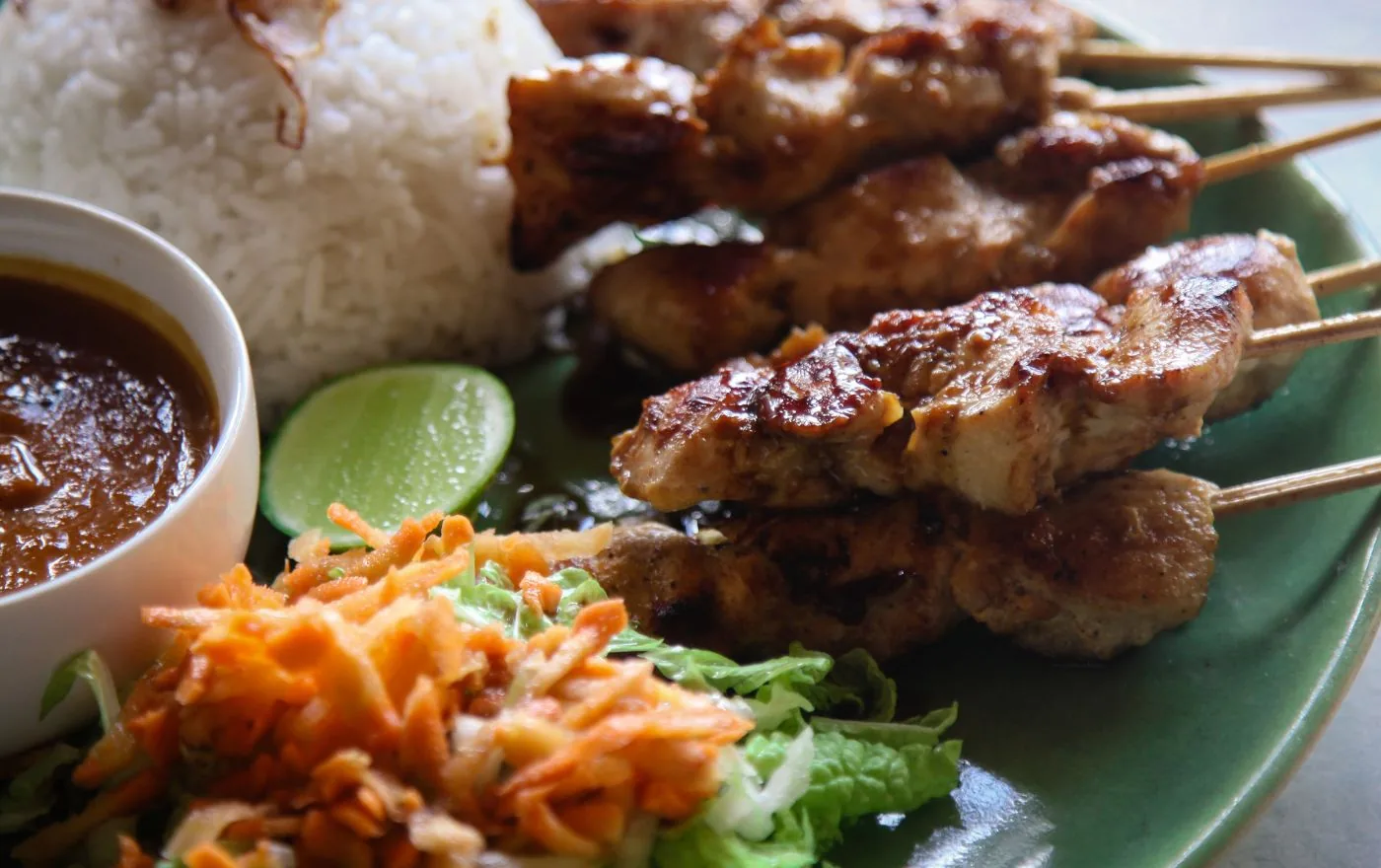
A dish unique to Bali, Sate Babi is tender marinated pork grilled over charcoal and served with a rich, spicy peanut sauce that brings everything together beautifully.
Prep: 25 min + marinating Cook: 15 min Serves: 4

Ingredients

For the Pork

  • 600 g (1.3 lb) pork shoulder or loin, cut into 2 cm cubes
  • 2 tablespoons kecap manis
  • 1 teaspoon ground turmeric
  • 1 teaspoon ground coriander
  • 3 cloves garlic, minced
  • 1 tablespoon vegetable oil
  • Salt to taste
  • Bamboo skewers, soaked in water for 30 minutes

For the Peanut Sauce

  • 150 g (1 cup) roasted peanuts, roughly crushed
  • 2 tablespoons kecap manis
  • 2 cloves garlic, minced
  • 2 red chilies, finely chopped
  • Juice of 1 lime
  • 150 ml (2/3 cup) warm water
  • 1 tablespoon vegetable oil
  • Salt to taste
Sate Babi pork satay skewers grilled over charcoal with spicy peanut sauce

Sate Babi, grilled pork satay skewers with rich peanut sauce

Instructions

  1. Combine the pork cubes with kecap manis, turmeric, coriander, garlic, oil, and salt in a bowl. Mix well, cover, and let it marinate in the fridge for at least an hour, or overnight for the best results.
  2. While the pork marinates, make the peanut sauce. Heat a little oil in a small pan and gently fry the garlic and chilies for about a minute. Add the crushed peanuts, kecap manis, lime juice, and warm water. Stir everything together and simmer for about 5 minutes until the sauce thickens slightly. Season with salt and set aside.
  3. Thread the marinated pork onto the soaked bamboo skewers, about 4 to 5 pieces per skewer, leaving a little space between each piece so the heat can reach all sides.
  4. Grill the skewers over high heat on a barbecue or grill pan for about 3 to 4 minutes per side, turning regularly, until the pork is cooked through and the edges are nicely caramelized and charred.
  5. Serve the hot skewers on a platter with the peanut sauce in a bowl alongside, and steamed rice on the side.
Kitchen Tip

For the most flavorful peanut sauce, use whole roasted peanuts and crush them yourself in a mortar or with a rolling pin. Pre made peanut butter works in a pinch, but the texture and toasty flavor of freshly crushed peanuts is worth the extra minute of effort.

Gado Gado: Vegetable Salad with Peanut Sauce

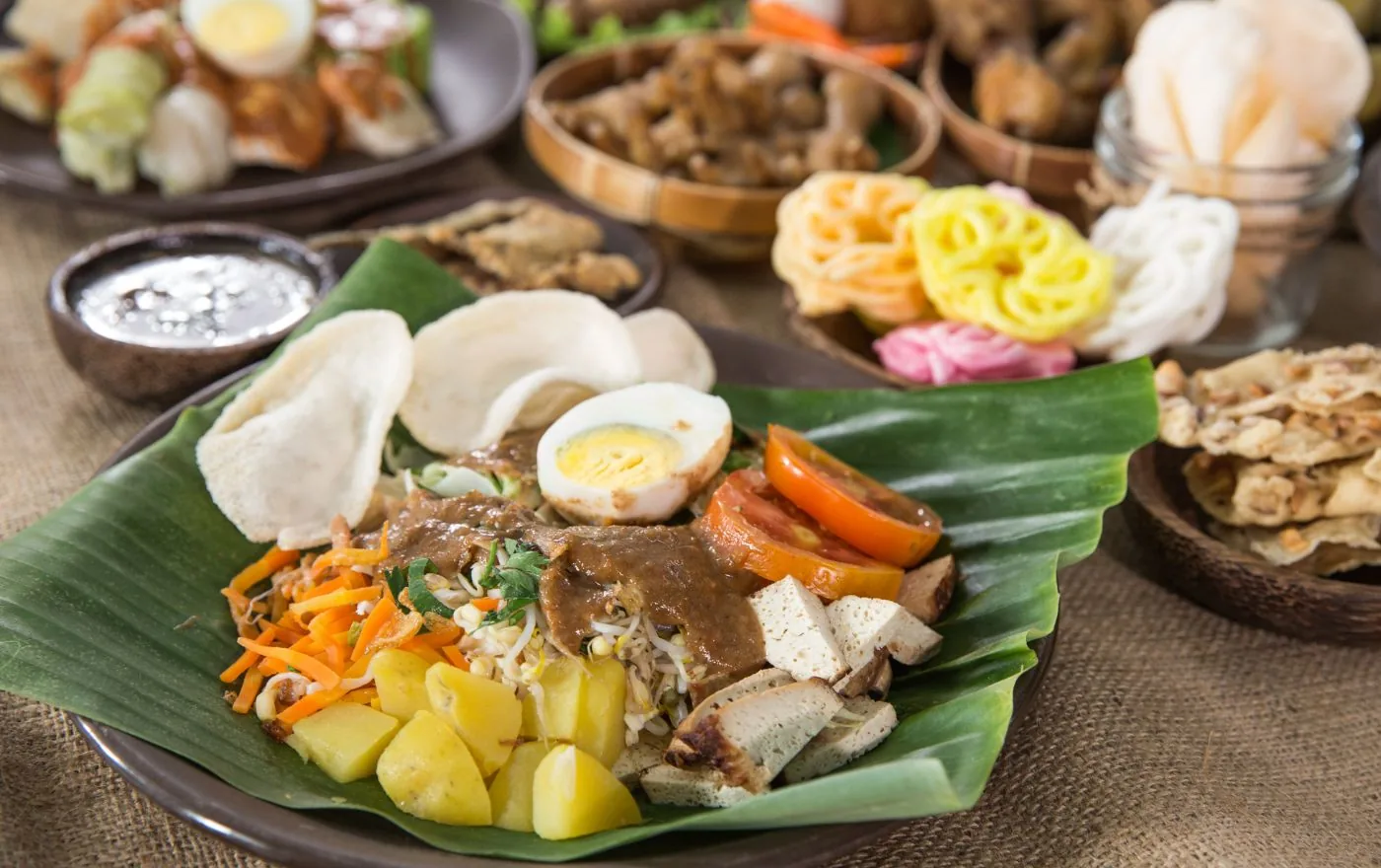
A colorful, hearty vegetarian dish, Gado Gado is a generous platter of steamed vegetables, tofu, tempeh, and egg, all drenched in the most addictive peanut sauce you will ever taste.
Prep: 20 min Cook: 20 min Serves: 4

Ingredients

For the Vegetables

  • 200 g (7 oz) green beans, trimmed and cut into 5 cm lengths
  • 200 g (7 oz) cabbage, shredded
  • 150 g (5 oz) bean sprouts
  • 2 medium potatoes, boiled and sliced
  • 200 g (7 oz) firm tofu, sliced and pan fried until golden
  • 150 g (5 oz) tempeh, sliced and pan fried until golden
  • 4 hard boiled eggs, halved
  • Prawn crackers (kerupuk) for serving

For the Peanut Sauce

  • 200 g (1.5 cups) roasted peanuts
  • 3 cloves garlic
  • 3 red chilies, or to taste
  • 2 tablespoons tamarind paste
  • 2 tablespoons palm sugar or brown sugar
  • 250 ml (1 cup) warm water
  • Salt to taste
Gado Gado with steamed vegetables, tofu, tempeh, egg, and creamy peanut sauce

Gado Gado, a colorful plate of vegetables and tofu drenched in creamy peanut sauce

Instructions

  1. Start with the peanut sauce. Blend the roasted peanuts, garlic, and chilies together in a food processor or blender until you get a rough paste. You want some texture here, not a completely smooth puree.
  2. Transfer the peanut paste to a saucepan over medium heat. Add the tamarind paste, palm sugar, and warm water. Stir constantly and let it simmer for about 5 minutes until the sauce thickens to a pourable but rich consistency. Season with salt and adjust the sweetness or heat to your liking.
  3. Steam the green beans for about 3 minutes until tender but still bright and snappy. Steam the cabbage for about 2 minutes. Blanch the bean sprouts in boiling water for just 30 seconds, then drain immediately.
  4. Arrange all the vegetables, potatoes, fried tofu, fried tempeh, and halved eggs on a large platter. You can keep them in neat sections or toss them together loosely.
  5. Pour the warm peanut sauce generously over everything, letting it pool in the crevices and coat the vegetables. Serve with kerupuk on the side for scooping and crunching.

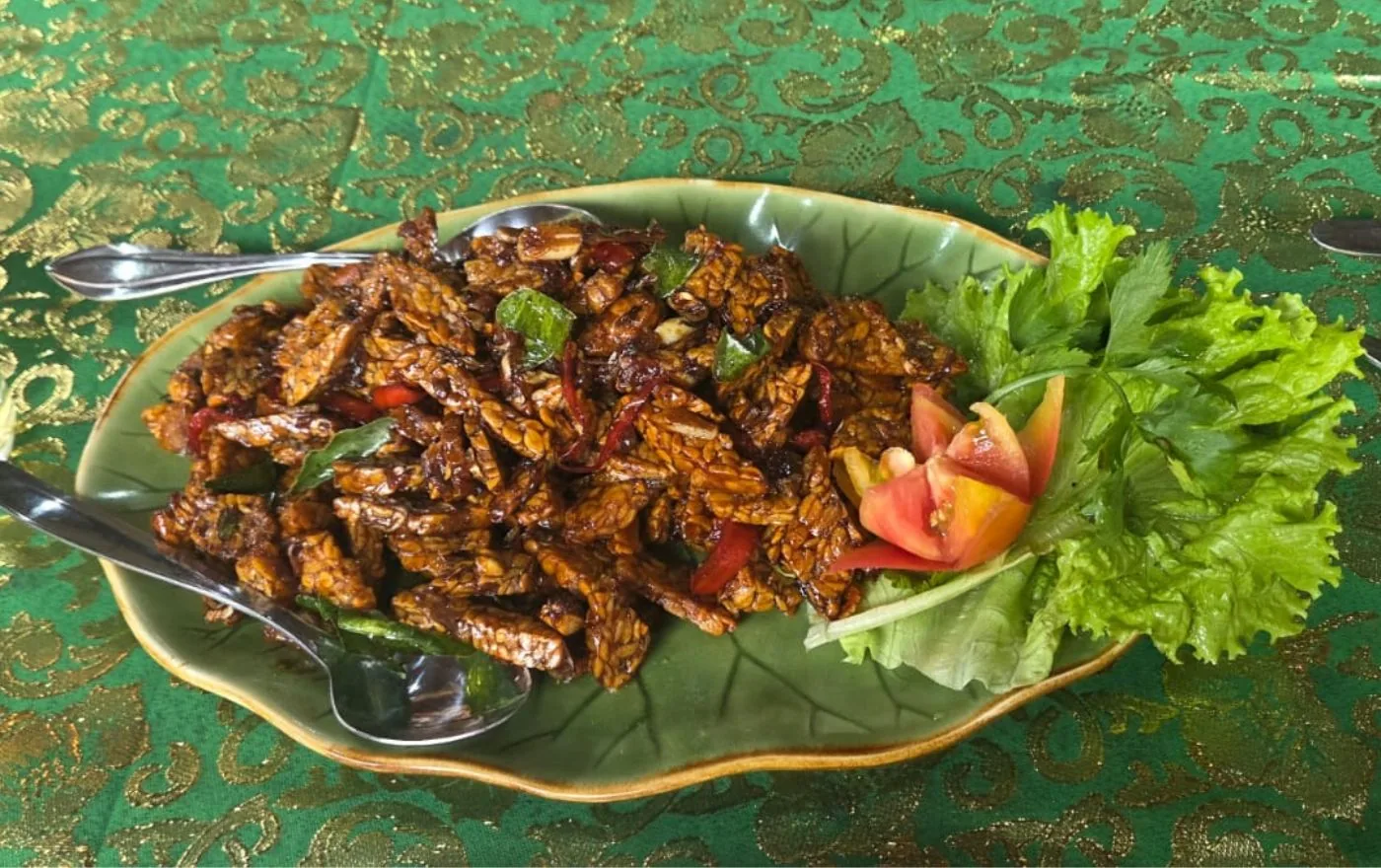
Tempe Goreng: Crispy Fried Tempeh in Sweet Glaze

One of the simplest and most satisfying dishes in Balinese cooking, Tempe Goreng turns humble fermented soybeans into a crispy, golden snack glazed with sweet soy sauce and garlic.
Prep: 10 min Cook: 15 min Serves: 4 as a side

Ingredients

  • 300 g (10 oz) tempeh, sliced into pieces about 1 cm thick
  • 3 cloves garlic, minced
  • 1 teaspoon salt
  • Vegetable oil for deep frying
  • 3 tablespoons kecap manis (sweet soy sauce)
  • 2 cloves garlic, finely minced
  • 1 red chili, finely sliced
  • 1 tablespoon water
Tempe Goreng crispy fried tempeh glazed with sweet soy sauce

Tempe Goreng, golden fried tempeh glazed with a sweet and savory sauce

Instructions

  1. Rub the tempeh slices with the minced garlic and salt on both sides. Let them sit for about 5 minutes so the seasoning has a chance to settle into the surface.
  2. Heat enough vegetable oil for deep frying to about 175C (345F). Carefully lower the tempeh slices into the oil and fry for about 3 to 4 minutes on each side until they turn deep golden and crispy on the outside.
  3. While the tempeh fries, make the glaze. In a small pan, gently warm the kecap manis with the garlic, chili, and water, stirring until it forms a slightly thickened, glossy sauce.
  4. Drain the fried tempeh on paper towels, then arrange on a plate and drizzle the sweet glaze generously over the top. Serve hot as a side dish with rice, or on its own as a snack that disappears faster than you can make it.

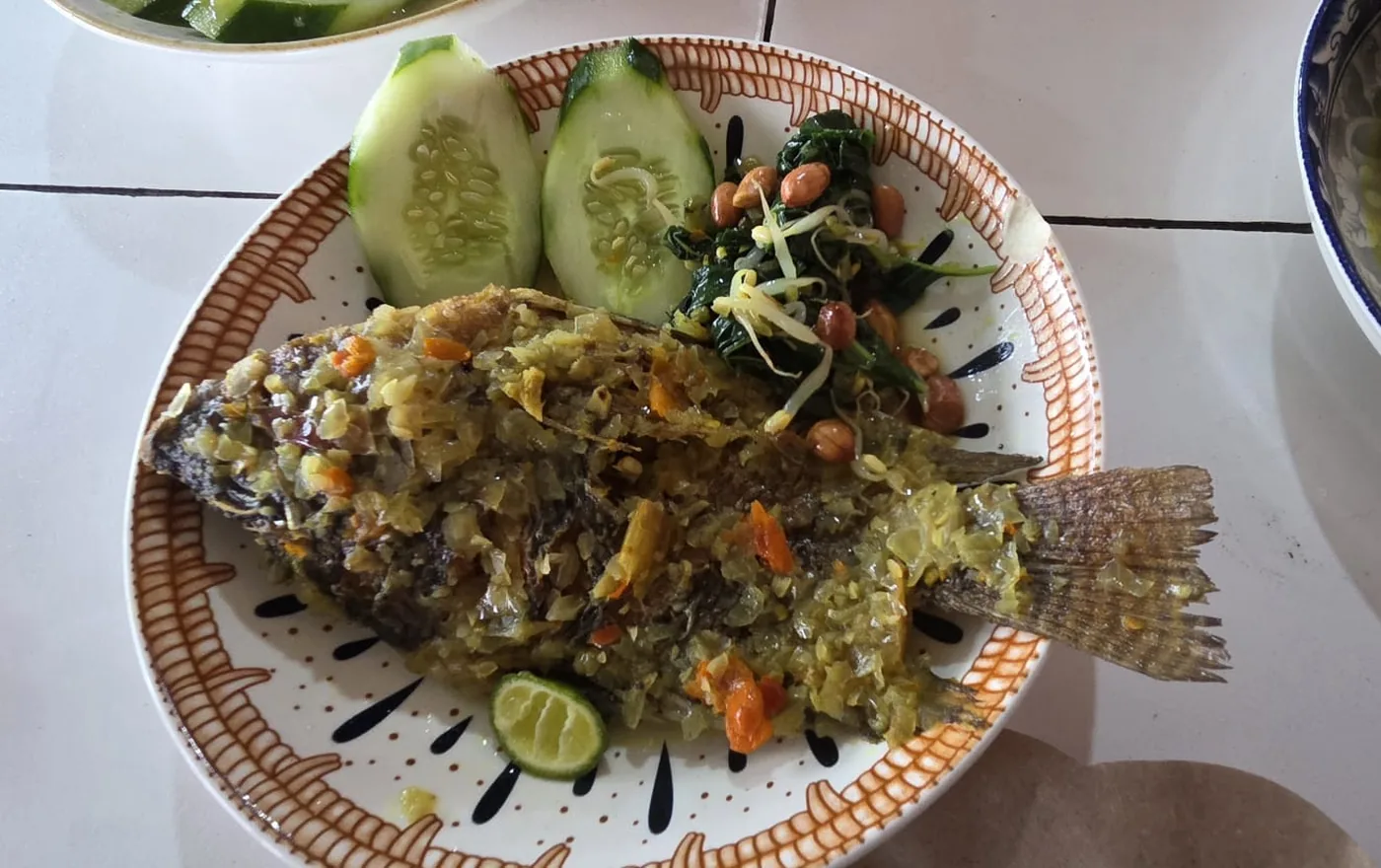
Ikan Goreng: Fried Fish Balinese Style

Bali is an island, and Ikan Goreng showcases the freshest catch with a simple turmeric marinade, a crispy fry, and a fiery peanut sambal that makes every bite unforgettable.
Prep: 15 min Cook: 20 min Serves: 2

Ingredients

  • 2 whole small fish (snapper or sea bream), cleaned and scored, or 4 thick fish fillets
  • 1 teaspoon ground turmeric
  • 1 teaspoon salt
  • Juice of half a lime
  • Vegetable oil for deep frying
  • 100 g (2/3 cup) roasted peanuts, roughly crushed
  • 3 red chilies, finely chopped
  • 2 cloves garlic, minced
  • 2 shallots, finely sliced
  • 1 tablespoon vegetable oil
  • 1 tablespoon kecap manis
  • Juice of 1 lime
  • Salt to taste
Ikan Goreng Balinese fried fish with spicy peanut sambal, spinach, and rice

Ikan Goreng, crispy fried fish with spicy peanut sauce and fresh greens

Instructions

  1. Rub the fish all over with the turmeric, salt, and lime juice, making sure to work the seasoning into the score marks. Let it marinate for about 15 minutes while you prepare the sambal.
  2. For the sambal, heat a tablespoon of oil in a small pan and gently fry the garlic, shallots, and chilies for about 2 minutes until softened. Add the crushed peanuts, kecap manis, and lime juice. Stir together, season with salt, and set aside.
  3. Heat enough oil for deep frying to 180C (350F). Pat the fish completely dry with paper towels, as any moisture will cause dangerous splattering.
  4. Carefully lower the fish into the hot oil and fry without moving it for about 5 to 6 minutes per side for whole fish, or 3 to 4 minutes per side for fillets, until the skin is golden, crispy, and the flesh is cooked through.
  5. Drain on paper towels, plate alongside steamed rice and sauteed spinach or water spinach, and spoon the spicy peanut sambal over the top.
Kitchen Tip

Scoring the fish in diagonal slashes before marinating allows the turmeric and salt to penetrate deeper into the flesh. It also helps the fish cook more evenly and gives you those beautiful crispy ridges along each cut.

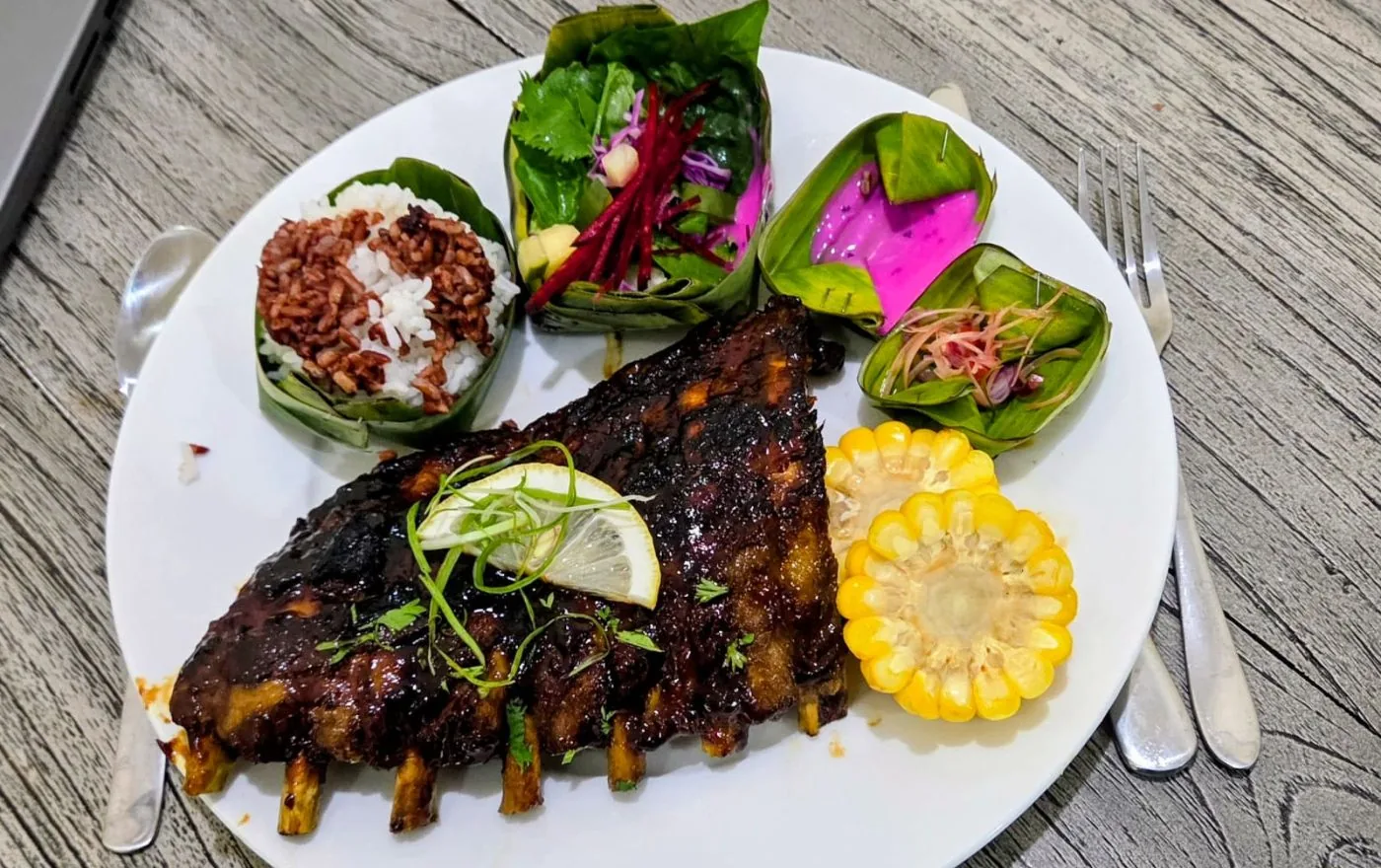
Babi Panggang: Slow Roasted Balinese Pork Ribs

Another pork dish unique to Bali, Babi Panggang is ribs slow roasted with a fragrant spice paste until the meat is falling off the bone, then finished with a sticky kecap manis glaze.
Prep: 20 min Cook: 2.5 hours Serves: 4

Ingredients

  • 1.2 kg (2.6 lb) pork ribs, rack or individual ribs
  • 2 tablespoons coconut oil

For the Spice Paste

  • 4 shallots, roughly chopped
  • 4 cloves garlic
  • 3 cm (1 in) fresh turmeric, or 1.5 teaspoons ground turmeric
  • 3 cm (1 in) fresh ginger
  • 2 red chilies
  • 1 teaspoon ground coriander
  • 1 teaspoon salt
  • 1/2 teaspoon black pepper

For the Glaze

  • 4 tablespoons kecap manis
  • 1 tablespoon honey
  • 1 clove garlic, minced
Babi Panggang Balinese style pork ribs slow cooked with traditional spices and kecap manis glaze

Babi Panggang, tender Balinese pork ribs with a sticky caramelized glaze

Instructions

  1. Blend all the spice paste ingredients together with the coconut oil until smooth. Rub this paste generously all over the ribs, making sure every surface is covered. Cover and marinate for at least 2 hours, or overnight in the fridge for the best flavor.
  2. Preheat your oven to 150C (300F). Place the ribs on a large piece of aluminum foil, wrap them tightly to seal in the moisture, and place the parcel on a baking tray.
  3. Slow roast the wrapped ribs for 2 hours. The low heat and sealed foil create a steamy environment that makes the meat incredibly tender while the spice paste infuses deeply into every fiber.
  4. Mix the kecap manis, honey, and garlic together for the glaze. After 2 hours, open the foil, brush the ribs generously with the glaze, and increase the oven temperature to 200C (400F).
  5. Roast the glazed ribs uncovered for a final 15 to 20 minutes until the surface is caramelized, sticky, and slightly charred at the edges. Serve with steamed rice, fresh vegetables, and sambal for those who want extra heat.

Balinese Desserts to Make at Home

From golden fried bananas to silky black rice pudding, these four traditional Balinese desserts are simple to make and bring a taste of the island into your kitchen. All you need is ripe bananas, coconut, pandan leaves, and a little palm sugar.

Pisang Goreng: Crispy Fried Bananas

The most beloved street snack in Bali, Pisang Goreng is ripe bananas coated in a light, crispy batter and fried until golden. This simple recipe comes together in minutes.

Prep: 10 min Cook: 10 min Serves: 4

Ingredients

  • 4 ripe bananas (firm enough to hold their shape)
  • 100 g (3/4 cup) rice flour
  • 2 tablespoons plain flour
  • 1 tablespoon sugar
  • 1/4 teaspoon ground turmeric (for golden color)
  • Pinch of salt
  • 120 ml (1/2 cup) ice cold water
  • Vegetable oil for deep frying
  • Honey or chocolate sauce for drizzling (optional)
Pisang Goreng golden crispy fried bananas fresh from the fryer

Pisang Goreng, golden fried bananas that are crispy outside and caramelized inside

Instructions

  1. Mix the rice flour, plain flour, sugar, turmeric, and salt together in a bowl. Add the ice cold water gradually while whisking until you have a smooth, light batter that coats the back of a spoon without being too thick.
  2. Peel the bananas and cut them in half lengthwise, or leave them whole for a more generous portion.
  3. Heat enough vegetable oil for deep frying to about 175C (345F). You want the oil hot enough that a drop of batter sizzles immediately on contact.
  4. Dip each banana piece into the batter, letting the excess drip off, then carefully lower it into the hot oil. Fry for about 3 to 4 minutes, turning once, until the batter is golden, crispy, and puffed up around the banana.
  5. Drain on paper towels for just a moment, then serve immediately while they are still sizzling hot. Drizzle with honey or chocolate sauce if you like, or enjoy them exactly as they are.

Pisang Molen: Banana Wrapped in Crispy Pastry

The elegant cousin of Pisang Goreng, Pisang Molen wraps ripe bananas in thin pastry sheets and fries them until flaky and golden. It is beautifully simple and absolutely delicious.

Prep: 15 min Cook: 10 min Serves: 4

Ingredients

  • 4 ripe bananas
  • 8 spring roll wrappers (or thin puff pastry sheets cut into rectangles)
  • 1 tablespoon flour mixed with 1 tablespoon water (for sealing)
  • Vegetable oil for deep frying
  • Powdered sugar for dusting (optional)
Pisang Molen ripe bananas wrapped in thin crispy pastry, fried golden

Pisang Molen, sweet bananas wrapped in layers of crispy, flaky pastry

Instructions

  1. Peel the bananas and cut each one in half widthwise so you have 8 shorter pieces that are easy to wrap.
  2. Place one banana piece diagonally on a spring roll wrapper. Fold the corner closest to you over the banana, tuck in the sides, then roll it up tightly toward the opposite corner. Use a dab of the flour paste to seal the edge firmly so it does not open during frying.
  3. Repeat with all the remaining bananas and wrappers until you have 8 neat parcels ready to go.
  4. Heat enough vegetable oil for deep frying to about 170C (340F). Gently lower the wrapped bananas into the oil, a few at a time so you do not crowd the pan, and fry for about 3 to 4 minutes, turning occasionally, until the pastry is golden, crispy, and flaky all over.
  5. Drain on paper towels, dust with a little powdered sugar if you like, and serve them warm. The pastry shatters with each bite to reveal the soft, sweet banana inside.
Kitchen Tip

Use bananas that are ripe but still firm. If they are too soft, they will turn to mush inside the wrapper. You want them sweet enough to caramelize but sturdy enough to hold their shape through the frying process.

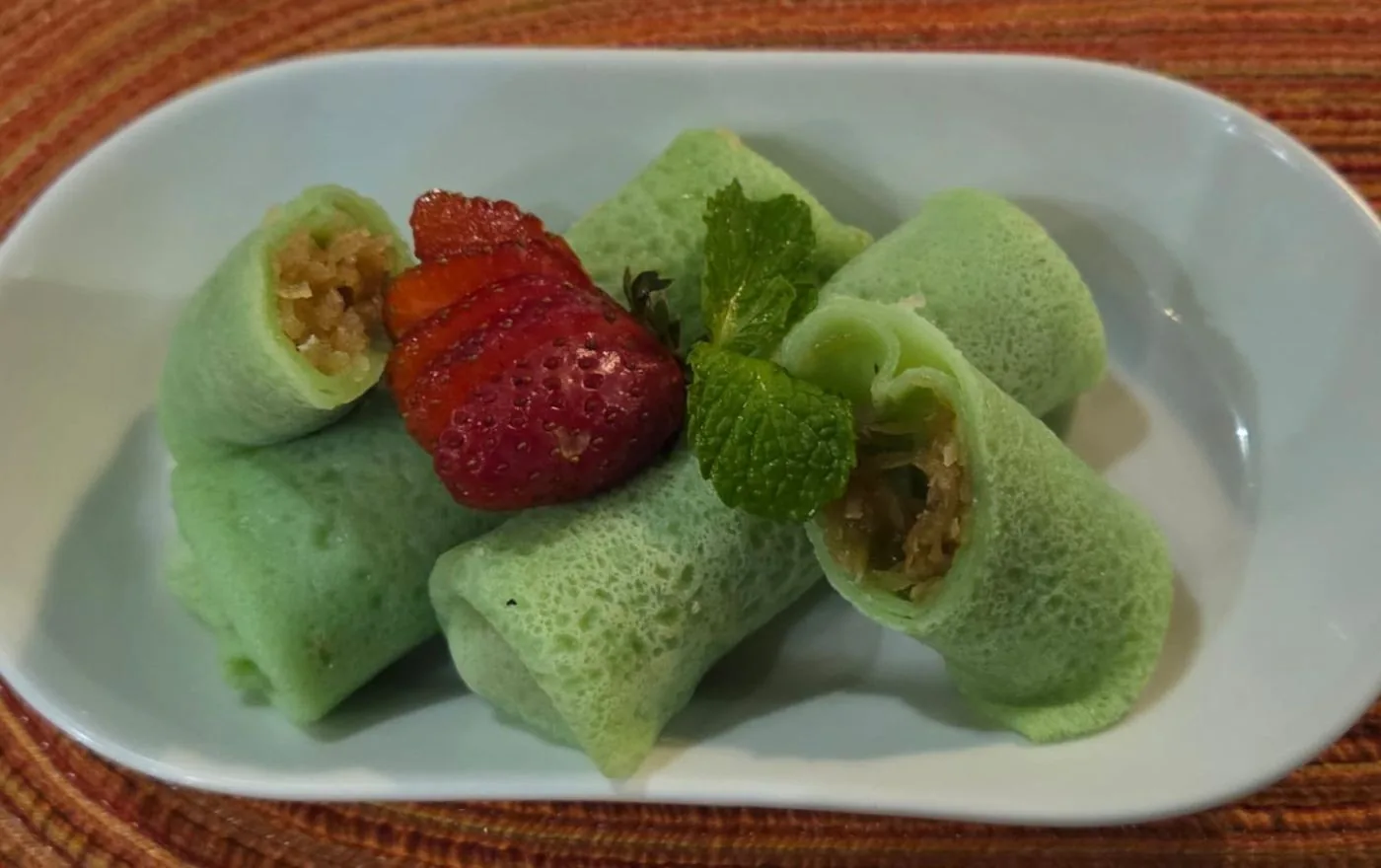
Kue Dadar: Green Pandan Coconut Pancakes

Also known as Dadar Gulung, Kue Dadar is one of the most beautiful desserts in Balinese cooking. The vibrant green color comes entirely from fresh pandan leaves blended with water, not artificial food coloring.
Prep: 20 min Cook: 30 min Serves: 8 pancakes

Ingredients

For the Coconut Filling

  • 200 g (7 oz) freshly grated coconut, or desiccated coconut rehydrated with warm water
  • 100 g (3.5 oz) palm sugar, grated, or dark brown sugar
  • 1 pandan leaf, tied in a knot
  • 100 ml (scant 1/2 cup) water
  • Pinch of salt

For the Pandan Crepes

  • 6 to 8 pandan leaves, roughly chopped
  • 150 ml (2/3 cup) water (for blending with pandan)
  • 100 g (3/4 cup) rice flour
  • 50 g (1/3 cup) plain flour
  • 2 eggs
  • 150 ml (2/3 cup) coconut milk
  • Pinch of salt
  • Coconut oil or vegetable oil for the pan
Kue Dadar green pandan crepe filled with sweet grated coconut and palm sugar

Kue Dadar, green pandan crepes filled with sweet coconut and palm sugar

Instructions

  1. Start with the filling. Combine the grated coconut, palm sugar, knotted pandan leaf, water, and salt in a saucepan over medium heat. Stir continuously as the sugar melts and the coconut absorbs all that sweet, fragrant liquid. Cook for about 10 minutes until the mixture is sticky, slightly caramelized, and the liquid has been fully absorbed. Remove the pandan leaf and set the filling aside to cool.
  2. For the pandan juice, blend the chopped pandan leaves with 150 ml water in a blender until completely broken down. Strain through a fine sieve, pressing hard on the pulp to extract every drop of that beautiful green juice. You should get about 100 ml of vibrant green liquid.
  3. In a bowl, whisk together the rice flour, plain flour, eggs, coconut milk, pandan juice, and salt until you have a smooth, thin batter with no lumps. It should be the consistency of thin cream.
  4. Heat a non stick pan or crepe pan over medium heat and brush it lightly with coconut oil. Pour in just enough batter to thinly coat the bottom of the pan, swirling quickly so it spreads evenly. Cook for about 1 to 2 minutes until the edges lift easily and the surface is set. Flip gently and cook for another 30 seconds. Repeat until all the batter is used.
  5. Place a generous spoonful of the sweet coconut filling along one edge of each crepe, fold the sides in, and roll it up into a neat cylinder. Serve at room temperature and watch everyone reach for a second one immediately.
Kitchen Tip

If you cannot find fresh pandan leaves, pandan extract or pandan paste from an Asian grocery store works as a substitute. Use about half a teaspoon of extract mixed into the batter. The color will not be as vivid, but the flavor will still carry that distinctive floral sweetness.

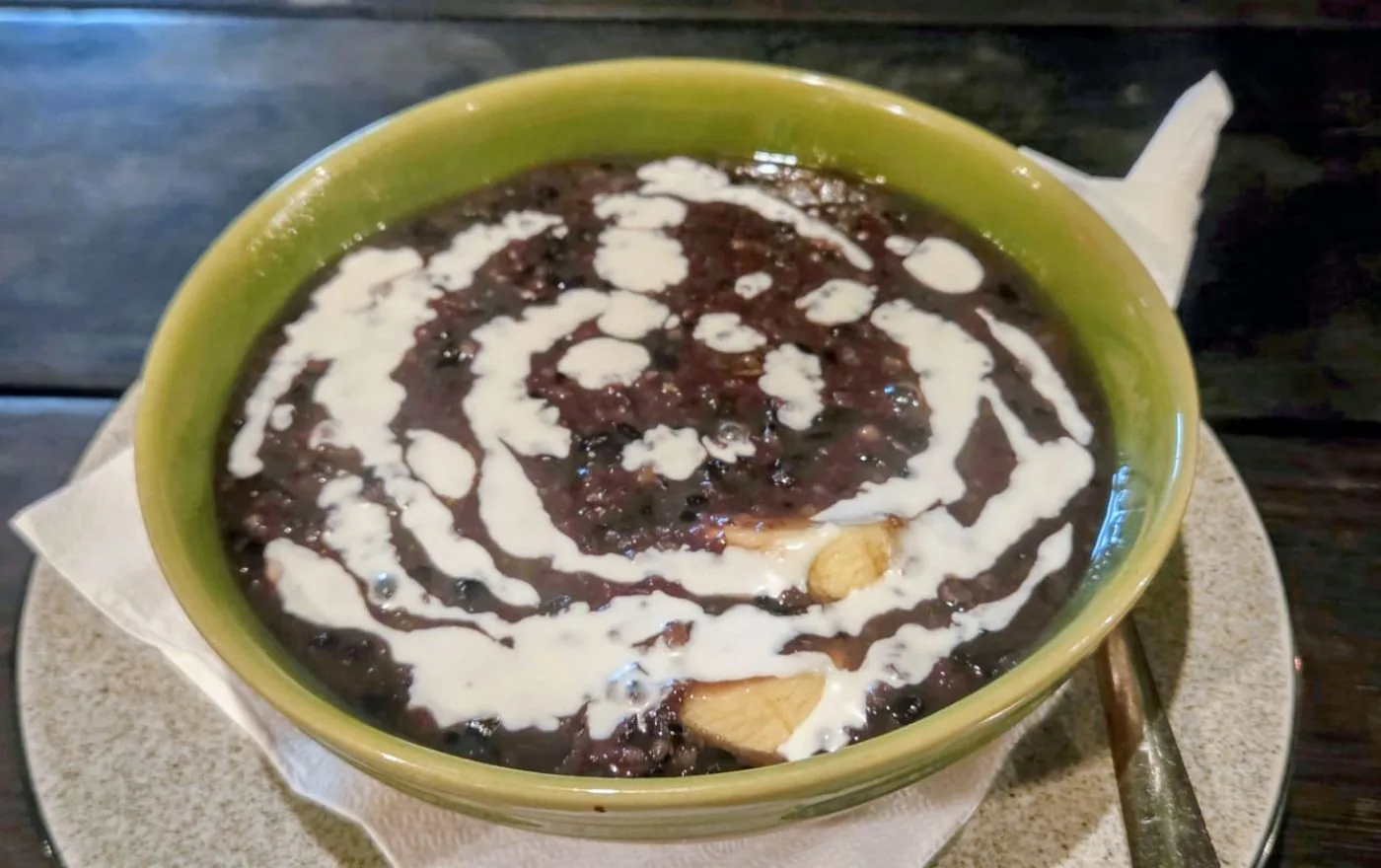
Bubur Injin: Black Rice Pudding with Coconut Milk

The perfect sweet ending to any Balinese meal, Bubur Injin is a warm, creamy black rice pudding topped with cold coconut milk. It is nourishing, comforting, and surprisingly easy to make at home.
Prep: 5 min + soaking Cook: 1 hour Serves: 4

Ingredients

  • 200 g (1 cup) black glutinous rice (also called black sticky rice)
  • 1 liter (4 cups) water
  • 2 pandan leaves, tied in a knot
  • 100 g (3.5 oz) palm sugar, grated, or dark brown sugar
  • Pinch of salt

For Serving

  • 200 ml (3/4 cup) thick coconut milk (the cream from the top of a can works perfectly)
  • Sliced ripe banana (optional)
Bubur Injin Balinese black rice pudding with coconut milk and sliced banana

Bubur Injin, creamy black rice pudding with coconut milk and sliced banana

Instructions

  1. Rinse the black rice thoroughly under cold water until the water runs relatively clear. Soak the rice in plenty of water for at least 4 hours, or overnight. This soaking step shortens the cooking time significantly and gives you a creamier result.
  2. Drain the soaked rice and place it in a heavy bottomed pot with 1 liter of fresh water and the knotted pandan leaves. Bring to a boil over high heat, then reduce to a gentle simmer.
  3. Cook the rice uncovered, stirring occasionally, for about 45 minutes to an hour. The rice will slowly absorb the water and become thick, creamy, and porridge like. Add a little more water during cooking if it starts to look too dry before the rice is tender.
  4. When the rice is soft, swollen, and has a beautiful purple hue, add the palm sugar and salt. Stir until the sugar dissolves completely and the pudding takes on a deeper color and a rich, caramel sweetness.
  5. Ladle the warm pudding into bowls and pour a generous amount of cold thick coconut milk over the top. The contrast of warm pudding and cold, creamy coconut is what makes this dessert truly special. Add sliced banana on top if you like, and enjoy it slowly.

Essential Balinese Pantry

Stock your kitchen with these ingredients and you will be ready to cook any Balinese recipe whenever the craving strikes. Most of these items keep well in the freezer or pantry for months.

🧄 Base Spice Paste (Bumbu)

  • Fresh turmeric (or ground turmeric as a substitute)
  • Galangal (or extra ginger if unavailable)
  • Shallots and garlic
  • Red chilies (fresh or dried)
  • Lemongrass stalks
  • Fresh ginger
  • Coriander seeds
  • Black peppercorns
  • Shrimp paste (terasi), optional

🥥 Sauces and Condiments

  • Kecap manis (sweet soy sauce), the most essential ingredient
  • Sambal oelek or fresh chili paste
  • Coconut milk (canned works perfectly)
  • Tamarind paste
  • Palm sugar (or dark brown sugar as a substitute)
  • Coconut oil

🌿 Fresh Herbs and Aromatics

  • Pandan leaves (fresh or frozen from Asian stores)
  • Kaffir lime leaves (freeze extras for later)
  • Lemongrass stalks (freeze whole stalks for months)
  • Galangal (freeze sliced portions)
  • Fresh turmeric root

🛒 Where to Find Ingredients

  • Asian grocery stores carry almost everything on this list
  • Online specialty shops for hard to find items like shrimp paste and palm sugar
  • Farmers markets sometimes carry lemongrass and fresh turmeric
  • Frozen herbs from Asian stores work just as well as fresh for cooking
  • Stock up and freeze: lemongrass, galangal, kaffir lime leaves, and pandan all freeze beautifully

The Bottom Line

These 15 recipes bring the heart and soul of Balinese cooking into your own kitchen, and they are just the beginning. Every dish on this page has a story, a tradition, and flavors that have been refined over generations. Cooking them at home is a wonderful way to relive the memories of a Bali trip or prepare your palate for one that is coming. For the full story behind each of these dishes, read our companion guide to 15 Balinese Dishes You Have to Try. And when you are ready to taste the authentic versions made by the hands that have been preparing them for decades, a private driver in Bali will take you to the warungs and street stalls where these flavors were born.

Bali Signature Tours Experience

You Have Cooked It at Home, Now Taste the Real Thing in Bali

These home recipes capture the spirit of Balinese flavors, but nothing compares to tasting these dishes where they were born. Your driver grew up eating this food. They know the warung where the Babi Guling skin crackles like thunder, the night market stall with the best Sate Lilit, and the roadside cart where the Pisang Goreng comes out of the oil so hot it steams in the tropical air. Travel with someone who lives and breathes this cuisine, and every meal in Bali becomes an experience you will carry with you forever.

Book Your Bali Food Tour →
🍖
Hidden Warungs
Your driver takes you where the locals eat
🌶️
Authentic Recipes
Taste the original versions of every dish
🧑‍🍳
Food Stories
Learn the history behind every recipe
← Back to Bali Guide