Learning even a handful of Indonesian and Balinese words will open doors, spark conversations, and bring genuine smiles from the local people you meet across the island.
Indonesian (Bahasa Indonesia) is the national language and what you will hear most often in Bali. It is one of the easiest Asian languages for English speakers to learn because it uses the Latin alphabet, has no tones, and the grammar is straightforward. Balinese is the local language spoken among Balinese people, and knowing even one or two Balinese words will genuinely surprise and delight the people you meet.
You do not need to be fluent. Even basic greetings and a "terima kasih" (thank you) spoken with a smile will completely change how people respond to you. This guide covers the most useful words and phrases organized by situation, with simple pronunciation guides so you can start practicing before you even board your flight.
These are the words you will use every single day in Bali. Polite greetings are deeply valued in Indonesian culture, and using the correct one for the time of day shows genuine respect.
Once you have mastered the basics you will notice how far a simple smile and hello can take you in Bali. Locals are naturally warm and responsive, and even a small effort in Bahasa Indonesia often leads to friendlier interactions, better service, and the occasional helpful local tip you will not find in any guidebook.
Do not worry about perfection, pronunciation is not the point. What matters is intention. The pronunciation is also quite straightforward, and for many travelers it feels similar to Spanish with clear vowel sounds and simple syllables. A cheerful "terima kasih" at a warung, a quick "selamat pagi" to your driver, or even a hesitant greeting at a market will almost always be met with encouragement and a smile back.
In Bali, language is not just communication, it is connection. The more you use it, the more the island seems to open up in return.
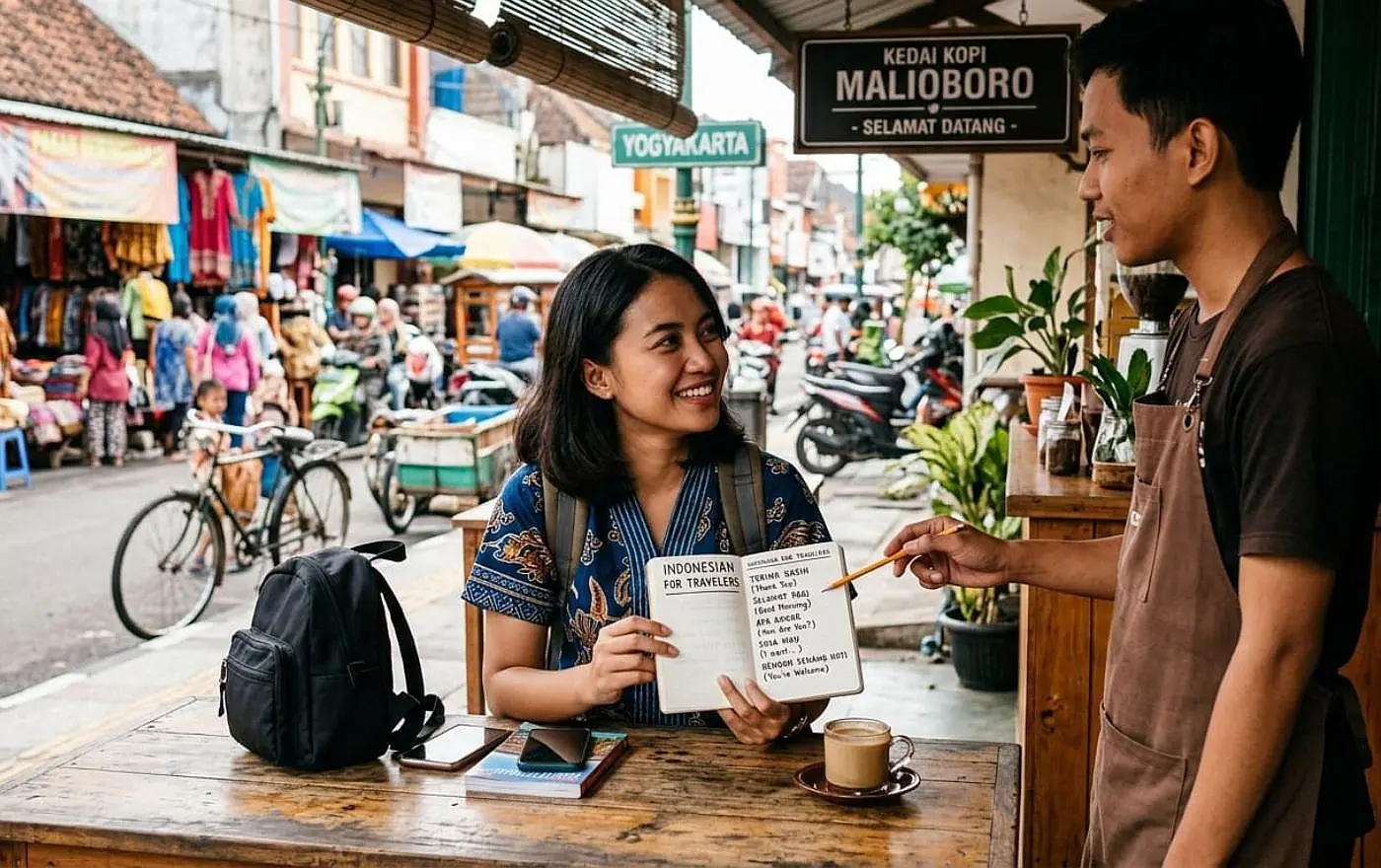
A few words of Indonesian go a long way at any local coffee shop in Bali
| Word / Phrase | Pronunciation | Meaning |
|---|---|---|
| Selamat pagi | seh-LAH-mat PAH-gee | Good morning |
| Selamat siang | seh-LAH-mat see-AHNG | Good afternoon |
| Selamat sore | seh-LAH-mat SOH-reh | Good late afternoon |
| Selamat malam | seh-LAH-mat MAH-lahm | Good evening |
| Apa kabar? | AH-pah KAH-bar | How are you? |
| Baik | BYE-ik | Good / Fine |
| Terima kasih | teh-REE-mah KAH-see | Thank you |
| Sama-sama | SAH-mah SAH-mah | You're welcome |
| Permisi | per-MEE-see | Excuse me |
| Maaf | mah-AHF | Sorry |
| Ya | YAH | Yes |
| Tidak | TEE-dahk | No |
| Tolong | TOH-long | Please / Help |
Indonesians greet based on the time of day, not with a generic hello. Using the right greeting for the time of day shows respect and immediately signals that you have made the effort to learn.
Numbers are essential for shopping, bargaining, understanding prices, and getting around. Indonesian numbers are logical, and once you learn one through ten, building larger numbers is simple.
Bahasa Indonesia| Word / Phrase | Pronunciation | Meaning |
|---|---|---|
| Satu | SAH-too | One |
| Dua | DOO-ah | Two |
| Tiga | TEE-gah | Three |
| Empat | EM-paht | Four |
| Lima | LEE-mah | Five |
| Enam | EH-nahm | Six |
| Tujuh | TOO-jooh | Seven |
| Delapan | deh-LAH-pahn | Eight |
| Sembilan | sem-BEE-lahn | Nine |
| Sepuluh | seh-POO-looh | Ten |
| Seratus | seh-RAH-toos | One hundred |
| Seribu | seh-REE-boo | One thousand |
Knowing a few food words transforms your dining experience. You can order with confidence at local warungs, ask about dishes, and compliment the cook in a way that means something real.
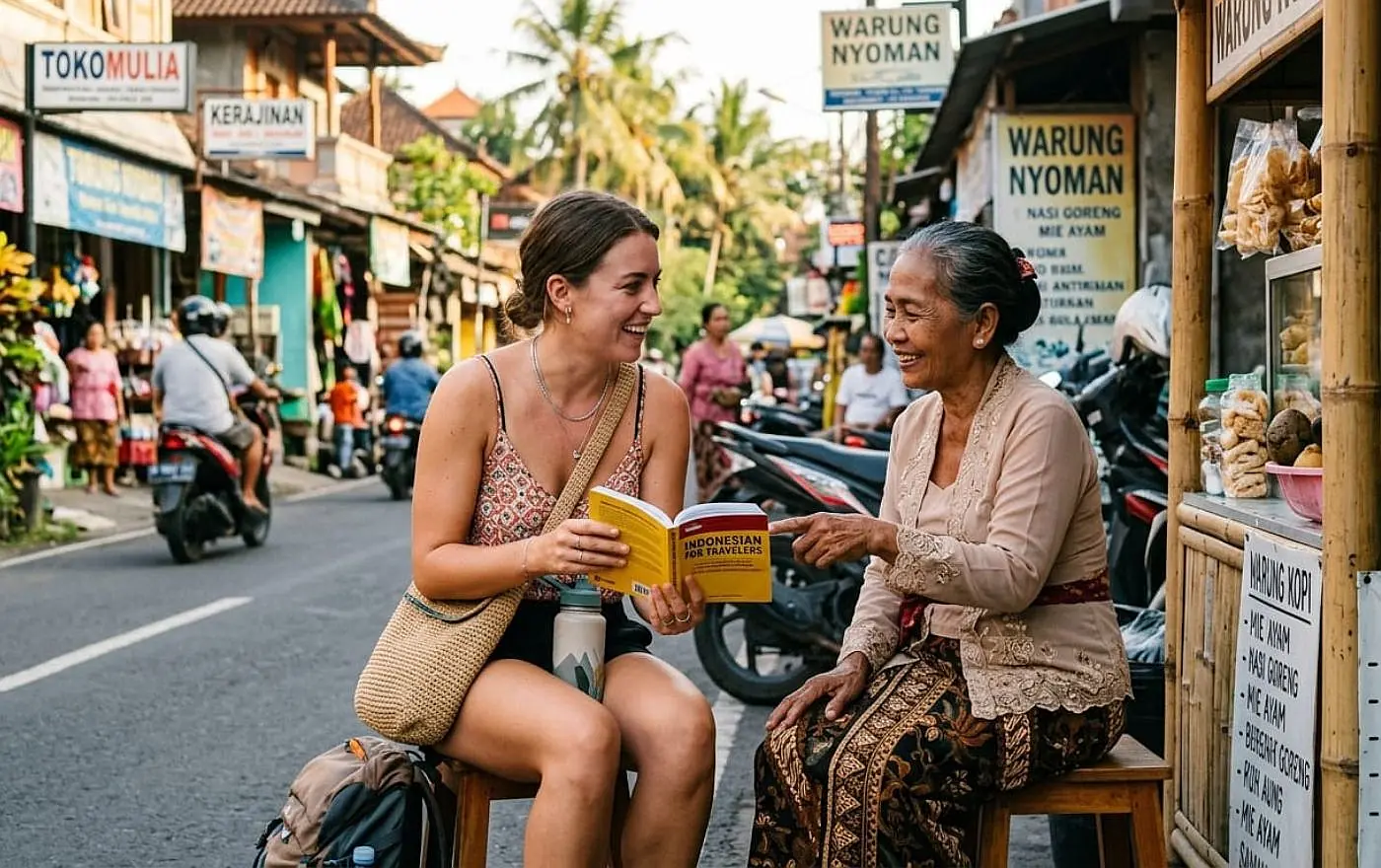
Sharing a phrasebook with a local is the fastest way to learn and make new friends
| Word / Phrase | Pronunciation | Meaning |
|---|---|---|
| Nasi | NAH-see | Rice |
| Mie | MEE | Noodles |
| Ayam | AH-yahm | Chicken |
| Babi | BAH-bee | Pork |
| Ikan | EE-kahn | Fish |
| Sayur | SAH-yoor | Vegetables |
| Pedas | PEH-dahs | Spicy |
| Tidak pedas | TEE-dahk PEH-dahs | Not spicy |
| Enak | EH-nahk | Delicious |
| Enak sekali | EH-nahk seh-KAH-lee | Very delicious |
| Minum | MEE-noom | Drink |
| Air putih | AH-eer POO-teeh | Plain water |
| Kopi | KOH-pee | Coffee |
| Teh | TEH | Tea |
| Bir | BEER | Beer |
| Satu lagi | SAH-too LAH-gee | One more |
| Minta bon | MEEN-tah BON | The bill please |
Telling the cook "enak sekali" (very delicious) after your meal is the highest compliment you can give. It costs nothing and the smile you get back is worth everything.
Markets and street shops in Bali operate on a bargaining culture. Knowing a few key phrases helps you negotiate with confidence and makes the whole experience more fun for both you and the seller.
Start by remembering that bargaining in Bali is not a confrontation but a friendly interaction. Prices are often flexible, especially in markets and small shops, so it is normal for the first price to be higher than what you will eventually pay. A smile and a relaxed attitude go a long way and often result in a better deal than aggressive negotiation.
It helps to ask "boleh kurang" which means "can it be cheaper." If the price does not feel right, you can politely walk away, as this is a very common part of the process and sellers may call you back with a better offer. Always stay respectful and good humoured, because the goal is a fair price that feels good for both sides.
Keep in mind that a few euros or dollars can mean a lot more to local vendors than it does to travelers, so even when bargaining, it is worth balancing fairness with value.
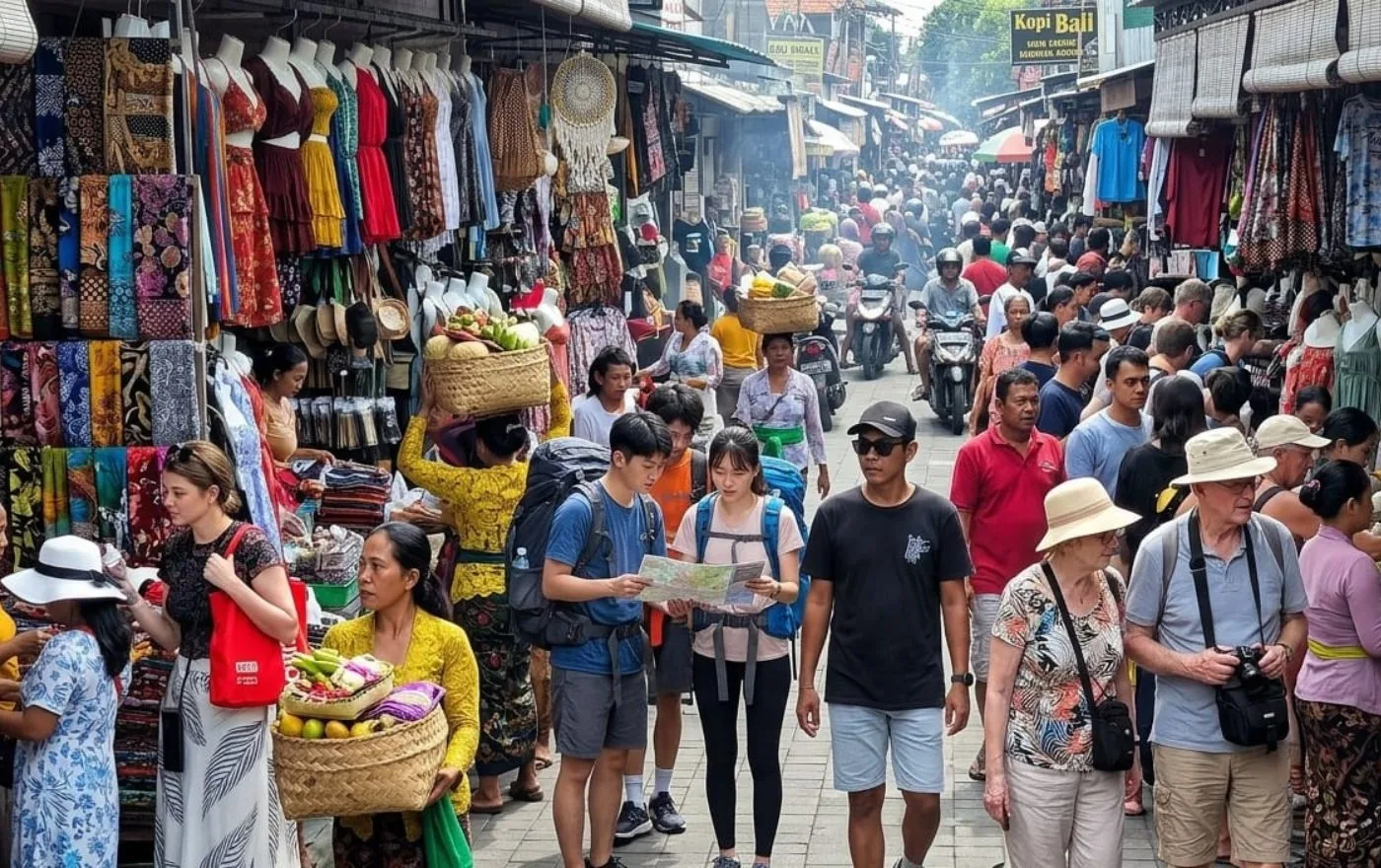
Bargaining at Balinese markets is more fun when you can do it in Indonesian
| Word / Phrase | Pronunciation | Meaning |
|---|---|---|
| Berapa? | beh-RAH-pah | How much? |
| Berapa harganya? | beh-RAH-pah har-GAH-nyah | How much does it cost? |
| Mahal | MAH-hahl | Expensive |
| Murah | MOO-rah | Cheap |
| Bisa kurang? | BEE-sah KOO-rahng | Can you lower the price? |
| Saya mau ini | SAH-yah MAU EE-nee | I want this one |
| Tidak, terima kasih | TEE-dahk, teh-REE-mah KAH-see | No, thank you |
| Bagus | BAH-goos | Good / Beautiful |
| Besar | beh-SAR | Big |
| Kecil | keh-CHEEL | Small |
Bargaining is expected and enjoyed at markets and street shops. Start at about half the asking price and work toward a number you are both happy with. Always bargain with a smile. Walking away politely often brings the price down quickly.
Whether you are giving directions to a driver or asking where the nearest temple is, these words will help you navigate the island with ease.
| Word / Phrase | Pronunciation | Meaning |
|---|---|---|
| Di mana? | dee MAH-nah | Where is? |
| Kiri | KEE-ree | Left |
| Kanan | KAH-nahn | Right |
| Lurus | LOO-roos | Straight |
| Dekat | DEH-kaht | Near / Close |
| Jauh | JAH-ooh | Far |
| Berhenti | ber-HEN-tee | Stop |
| Jalan | JAH-lahn | Road / Street |
| Pantai | PAHN-tye | Beach |
| Pura | POO-rah | Temple |
These are Balinese words, not Indonesian. Using them shows a deeper appreciation for the local culture and will genuinely surprise and delight the Balinese people you meet.
Once you start using even a few Balinese words you will notice a different kind of reaction. A simple "suksma" for thank you or "om swastiastu" as a greeting often brings an immediate smile and a sense of connection that goes beyond standard tourist interactions. These small efforts are not expected but they are deeply appreciated.
Balinese language is closely tied to tradition and daily life so using it signals respect for the island's identity rather than just its scenery. Do not worry about using it perfectly. What matters most is the willingness to try and the openness behind it.
You may find that these words become small keys that open unexpected doors such as warmer conversations at a warung, extra patience from a driver, or even a shared laugh when you mispronounce something. In Bali, language is not just spoken, it is felt.
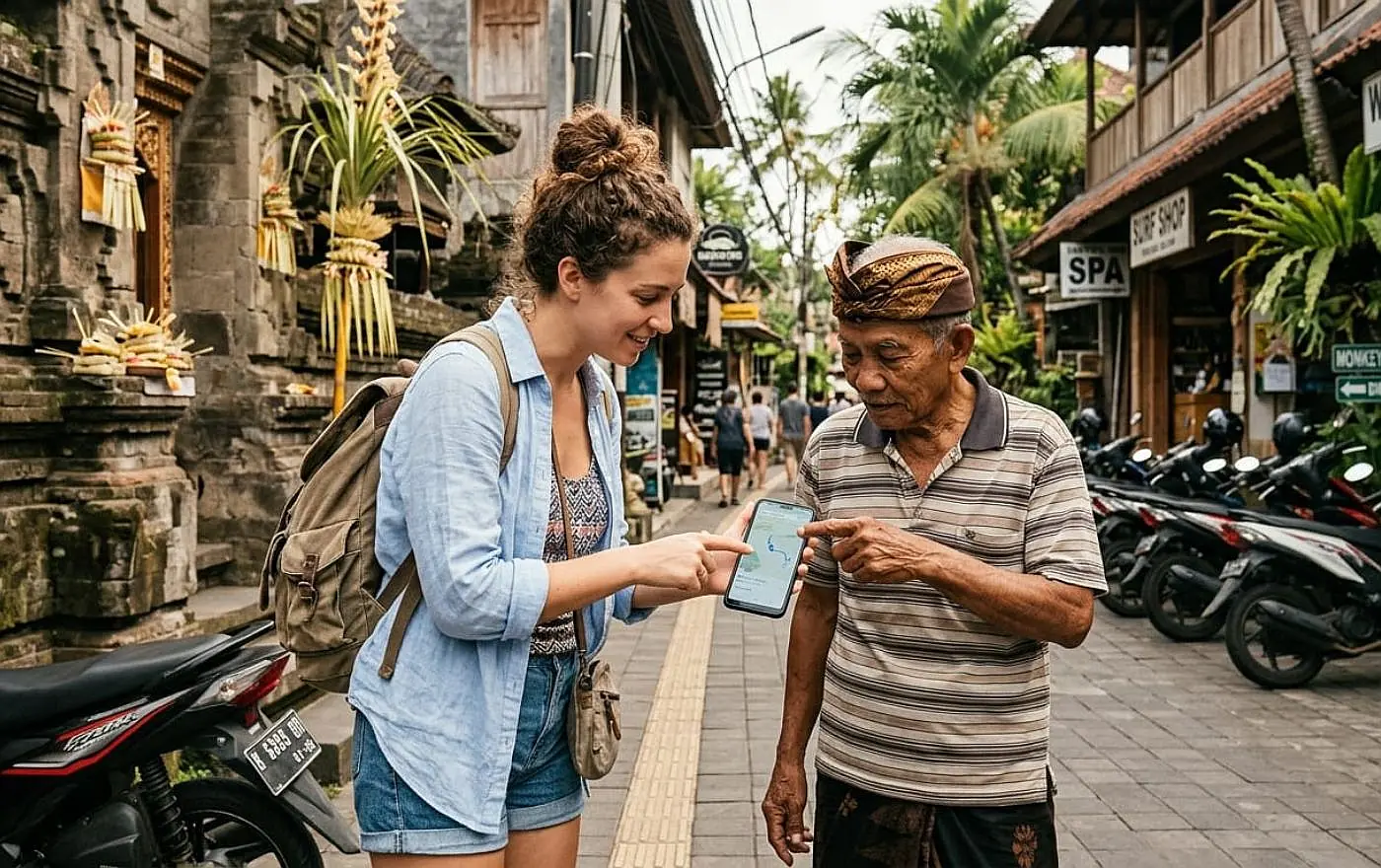
Speaking a few Balinese words creates genuine connections with the local people
| Word / Phrase | Pronunciation | Meaning |
|---|---|---|
| Om Swastiastu | ohm swah-stee-AH-stoo | Traditional Balinese greeting (like "hello" with spiritual meaning) |
| Matur suksma | mah-TOOR sook-SMAH | Thank you |
| Suksma | sook-SMAH | Thank you (shorter / casual) |
| Rahajeng semeng | rah-HAH-jeng SEH-meng | Good morning |
| Kenken kabare? | ken-KEN kah-BAH-reh | How are you? |
| Becik | beh-CHEEK | Good / Fine |
| Bli | BLEE | Older brother / respectful term for a man |
| Mbok | M-BOK | Older sister / respectful term for a woman |
Saying "matur suksma" instead of "terima kasih" at a temple or to your Balinese driver will earn you a genuinely surprised and appreciative reaction. It shows that you have taken the time to learn the difference between Indonesian and Balinese, and that small effort means a great deal to the local people.
Indonesian is one of the most phonetic languages in the world. Once you know a few simple rules, you can read and pronounce almost any word correctly on your first attempt.
Your Bali Signature Tours driver speaks English and is happy to teach you local words and phrases along the way. Traveling with a private driver is the best way to practice your Indonesian while exploring the island with a friendly local guide by your side.
Book a private tour with an English speaking Balinese driver who will help you practice your new phrases while showing you the best of the island.
Browse All Bali Tours →