From island wide days of silence to tiny flower offerings on every doorstep, Balinese ceremonies happen every single day. Here is what to expect, how to participate respectfully, and why it will be the highlight of your trip.
Bali is the only Hindu island in Indonesia, a country of over 17,000 islands where the vast majority of the population practices Islam. This makes Bali culturally extraordinary. The Balinese practice a unique form of Hinduism that blends ancient Indian Hindu traditions with local animism, ancestor worship, and Buddhist influences. The result is a spiritual life so deeply woven into daily existence that the line between the sacred and the everyday simply does not exist here.
You cannot visit Bali without witnessing a ceremony. It is literally impossible. There are over 20,000 temples on the island, and each one celebrates its own anniversary every 210 days according to the Pawukon calendar. This means that on any given day, dozens of temple ceremonies are taking place across Bali. Add to that the daily offerings placed on every doorstep, the full moon and new moon rituals, the life cycle ceremonies, and the major island wide festivals, and you begin to understand why Bali is often called the Island of the Gods.
The Balinese Pawukon calendar runs on a 210 day cycle rather than the 365 day Western calendar. This is why major festivals like Galungan and Kuningan do not fall on the same Western dates each year. They shift forward by roughly five months annually, which means no matter what month you visit, there is a good chance you will encounter a significant celebration.
The difference between watching a ceremony confused and truly understanding what is happening cannot be overstated. Traveling with a private driver and local guide transforms these moments from curious spectacles into deeply meaningful experiences. Your guide grew up with these traditions and can explain every prayer, every offering, and every gesture so you leave with genuine understanding rather than just photographs.
Within minutes of arriving in Bali, you will notice small woven palm leaf baskets placed on the ground, on doorsteps, on shop counters, on car dashboards, and even on top of ATMs and motorbikes. These are Canang Sari, the daily offerings that form the foundation of Balinese spiritual life. Each one is made fresh every morning as an expression of gratitude to Sang Hyang Widhi Wasa, the supreme god in Balinese Hinduism.
Every Canang Sari contains flowers, rice, and a stick of incense. The flowers are arranged with intention: white petals face east toward Iswara, red petals face south toward Brahma, yellow petals face west toward Mahadeva, and blue or green petals face north toward Vishnu. The incense smoke carries the prayers upward to the heavens. Some offerings also include small sweets, crackers, or even cigarettes, depending on the purpose and the spirit being honored.
Balinese women typically prepare dozens of Canang Sari each morning before the rest of the household wakes. It is a meditative practice, performed with care and devotion. The offerings are placed at home shrines, family temples, outside businesses, at crossroads, and anywhere a spirit might dwell. For the Balinese, this is not a chore. It is a conversation with the divine that happens before breakfast.
Never step on a Canang Sari. Watch where you walk, especially on sidewalks and in front of shops. These offerings are sacred, and stepping on one is considered very disrespectful. Your driver will point these out and explain the meaning of each element as you explore the island together.
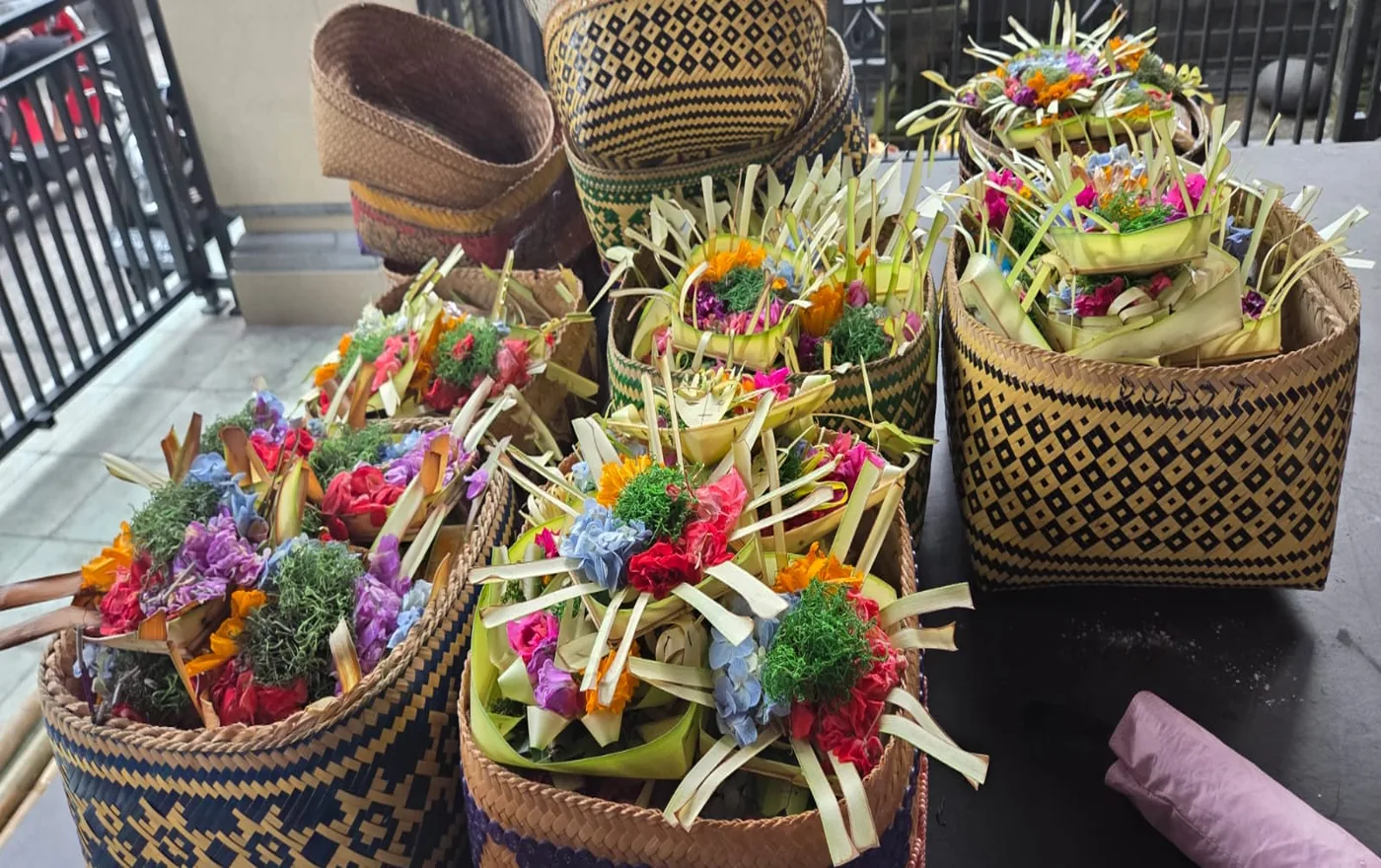
Freshly prepared canang sari offerings in woven baskets, ready for a temple ceremony
There is nothing else like Nyepi anywhere on earth. For 24 hours, the entire island of Bali goes completely silent. No lights, no noise, no travel, no work, no entertainment. Streets are empty. Shops are closed. Even the Ngurah Rai International Airport shuts down completely. No flights land or depart. It is as if someone pressed pause on an island of over four million people.
The evening before Nyepi is called Pangrupukan, and it is the polar opposite of the silence that follows. Communities across Bali spend weeks building massive Ogoh Ogoh statues, towering demon figures made from bamboo, papier mache, and styrofoam. As darkness falls, these enormous creations are carried through the streets on bamboo platforms by dozens of young men, accompanied by drums, cymbals, fire, and incredible energy. The purpose is to attract evil spirits so they can be driven away.
The Balinese believe that after the Ogoh Ogoh procession lures the demons out, the silence of Nyepi tricks them into thinking the island is uninhabited. Finding no activity, no light, and no sound, the evil spirits leave Bali entirely. When the sun rises the next morning, the island is spiritually renewed and cleansed for the new year.
The morning after Nyepi is extraordinary. The air feels fresh and clean because there has been no traffic or pollution for an entire day. On a clear night during Nyepi, you can see the Milky Way from almost anywhere on the island because there are zero artificial lights. It is one of the most remarkable natural experiences Bali offers.
If you are in Bali during Nyepi, stock up on food and supplies the day before. Hotels provide meals for guests, but you cannot leave the property for the entire 24 hours. The Ogoh Ogoh parade the night before is absolutely worth seeing and your private driver can take you to the best viewing spots in advance. Nyepi falls on the Balinese New Year (Saka calendar), usually in March or April.
Ogoh Ogoh parade before Nyepi: older and younger kids carrying their handmade demon statues through the streets
Galungan is one of the most important festivals in the Balinese calendar. It celebrates the triumph of dharma (good) over adharma (evil), and the Balinese believe that during this time, the spirits of deceased ancestors return to their former homes to visit their living families. Every household prepares elaborate offerings, cooks special feasts, and dresses in their finest ceremonial clothing to welcome the returning souls.
The most visually stunning element of Galungan is the penjor. These are tall, gracefully curved bamboo poles decorated with woven coconut leaves, flowers, fruits, and ornaments. They are erected along both sides of every road in Bali, creating a breathtaking canopy of natural decoration that stretches for kilometers. Penjor are one of the most photographed sights in Bali and symbolize the mountain where the gods reside, with the curved tip pointing toward Mount Agung, the holiest peak on the island.
Ten days after Galungan, the Balinese celebrate Kuningan, the day the ancestral spirits return to heaven. Families prepare yellow rice (the color of prosperity) and make special offerings at family temples. It is a more intimate, reflective day compared to the grand energy of Galungan, but equally meaningful. Together, the Galungan and Kuningan period creates nearly two weeks of heightened spiritual activity across the island.
Because Galungan follows the 210 day Pawukon calendar, it occurs roughly every seven months by the Western calendar. This means you might catch it no matter what month you visit. The entire island transforms during this period, and the energy is palpable everywhere you go.
Driving through Bali during Galungan is magical. Every single road is lined with penjor, and the entire island feels like it has been dressed for a celebration. Your private driver will take you through the most beautiful streets and explain what each decoration means, turning a simple drive into an unforgettable cultural experience.
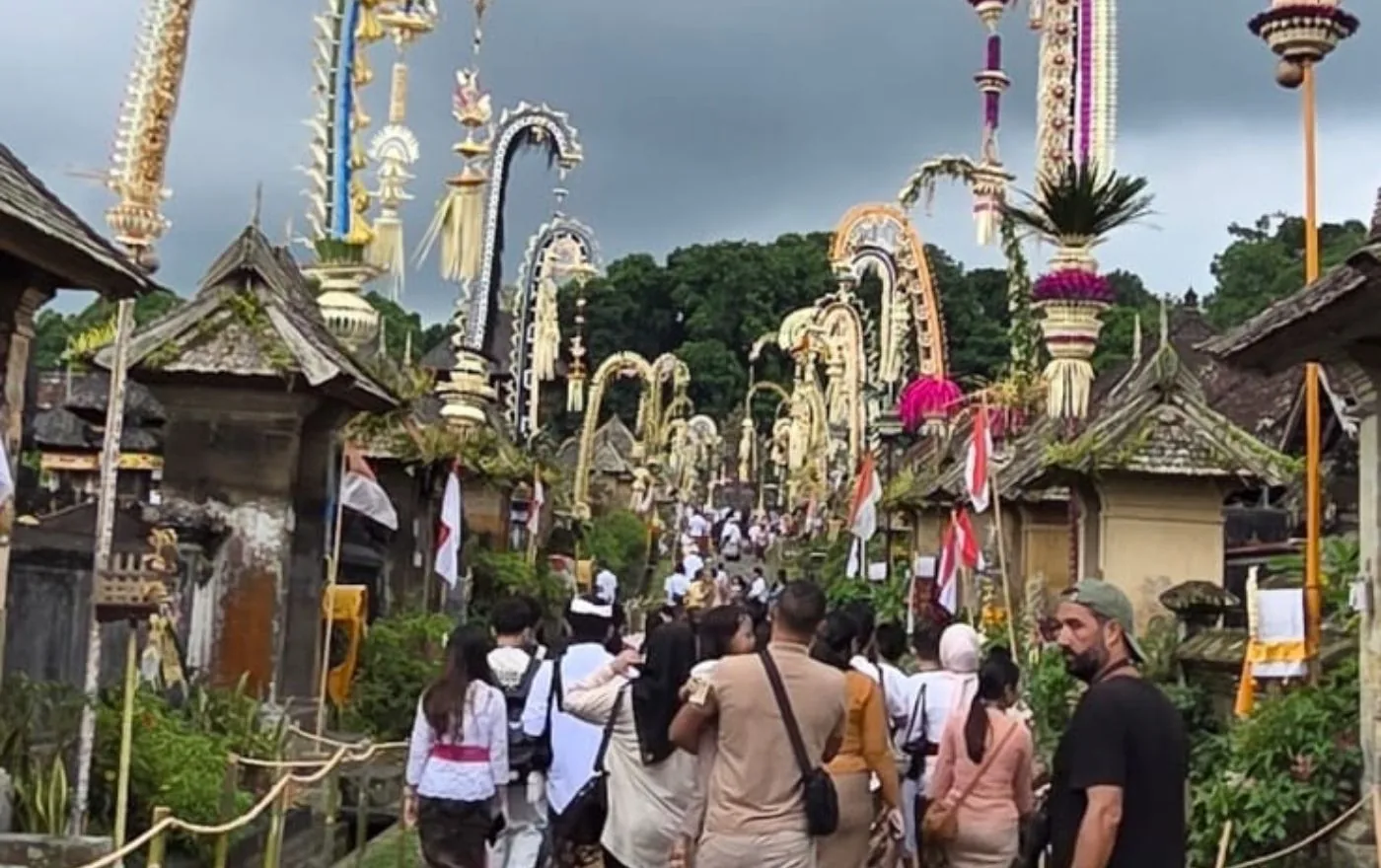
Penjor bamboo poles lining the main street of Penglipuran Village during Galungan festival
A few days before Nyepi, one of the most visually breathtaking events in all of Bali takes place. Melasti is a purification ceremony where entire temple communities walk in procession to the nearest beach or natural water source. Hundreds of people dressed in white carry sacred temple objects called pratima on their heads, accompanied by the haunting sounds of gamelan music and the rhythmic chanting of prayers. The ocean water is used to purify the sacred objects before the silence of Nyepi.
The visual impact of Melasti is extraordinary. Long lines of worshippers in pristine white clothing walking against the backdrop of blue sky, golden sand, and turquoise ocean create images that stay with you forever. Multiple Melasti processions happen simultaneously at different beaches around the island, so there are many opportunities to witness this ceremony during the days before Nyepi.
Melasti represents the purification of the human soul and the sacred temple instruments. The Balinese believe that the ocean has the power to wash away impurities and negative energy, preparing both people and sacred objects for the spiritual renewal of the new year. The procession route from the temple to the sea and back can stretch for several kilometers, and the entire community participates regardless of age.
If you see a Melasti procession, you are welcome to watch and photograph respectfully from a distance. Never block the path or touch the sacred objects being carried. Your private driver will know which beaches have processions scheduled and can position you at the best viewpoints for an incredible experience.
Temple yearly celebration procession to the sea, a 7 km walk carrying sacred objects for purification
Every one of Bali's more than 20,000 temples has its own anniversary celebration called an Odalan. Because each anniversary follows the 210 day Pawukon calendar, there is quite literally a temple ceremony happening somewhere in Bali every single day of the year. Some Odalan celebrations last just a single day, while ceremonies at the most important temples can continue for three to eleven days with elaborate rituals, performances, and community gatherings.
An Odalan is a feast for the senses. The air fills with the sound of gamelan orchestras playing intricate bronze melodies. Traditional dance performances tell ancient stories from the Ramayana and Mahabharata epics. Towering offerings called gebogan, constructed from fruits, flowers, rice cakes, and roasted meats, are carried on women's heads in a stunning display of balance and devotion. Entire communities come together dressed in their finest temple clothing, creating a scene of extraordinary beauty and devotion.
Visitors are often welcome to watch and sometimes even participate in Odalan celebrations, provided they follow proper dress codes and behave respectfully. The biggest and most spectacular temple ceremonies take place at Besakih (the Mother Temple on Mount Agung's slopes), Uluwatu (the clifftop temple above the Indian Ocean), and Tirta Empul (the sacred water temple near Ubud). These events are extraordinary to witness and completely unlike anything most visitors have ever experienced.
Your driver will know which temples have ceremonies happening during your visit. This is one of the biggest advantages of having a local guide. You will experience authentic celebrations that no travel app or guidebook can show you, because many of these ceremonies happen at small village temples that tourists rarely visit on their own.
Pura Kehen Temple, Bangli, during its yearly anniversary ceremony (Odalan)
Balinese cremation ceremonies are nothing like the somber funerals most Westerners are accustomed to. In Bali, death is not an ending. It is a release. The Balinese believe that cremation frees the soul from the physical body so it can be reincarnated or ascend to the spiritual realm. Because of this belief, Ngaben ceremonies are colorful, loud, festive, and sometimes even joyful occasions. You will hear music, see elaborate decorations, and witness entire communities coming together in celebration.
The most spectacular element of Ngaben is the cremation tower, a multi tiered bamboo and paper structure that can reach several stories tall. The body is placed inside the tower and carried through the streets by dozens of men. Along the route, the carriers deliberately spin the tower around at intersections to confuse evil spirits so they cannot follow the soul. For higher caste families, the body is then transferred to a sarcophagus shaped like a bull (lembu) before being cremated. Mass cremation ceremonies, where multiple families participate together, are the most spectacular and can involve hundreds of people.
The Balinese consider it good luck if tourists happen to witness a cremation ceremony. You are a welcome observer, and your presence is not seen as intrusive. However, common sense and respect apply. Watch from a reasonable distance, ask before taking photographs of close family members, and never block the procession route. If you are unsure about the etiquette, your guide will help you navigate the situation gracefully.
You may watch a cremation ceremony from a respectful distance. Ask before photographing individuals in mourning or prayer. Never block the procession or touch the cremation tower. While these ceremonies are celebratory in nature, they are still deeply personal family events. A quiet, respectful presence is always appreciated.
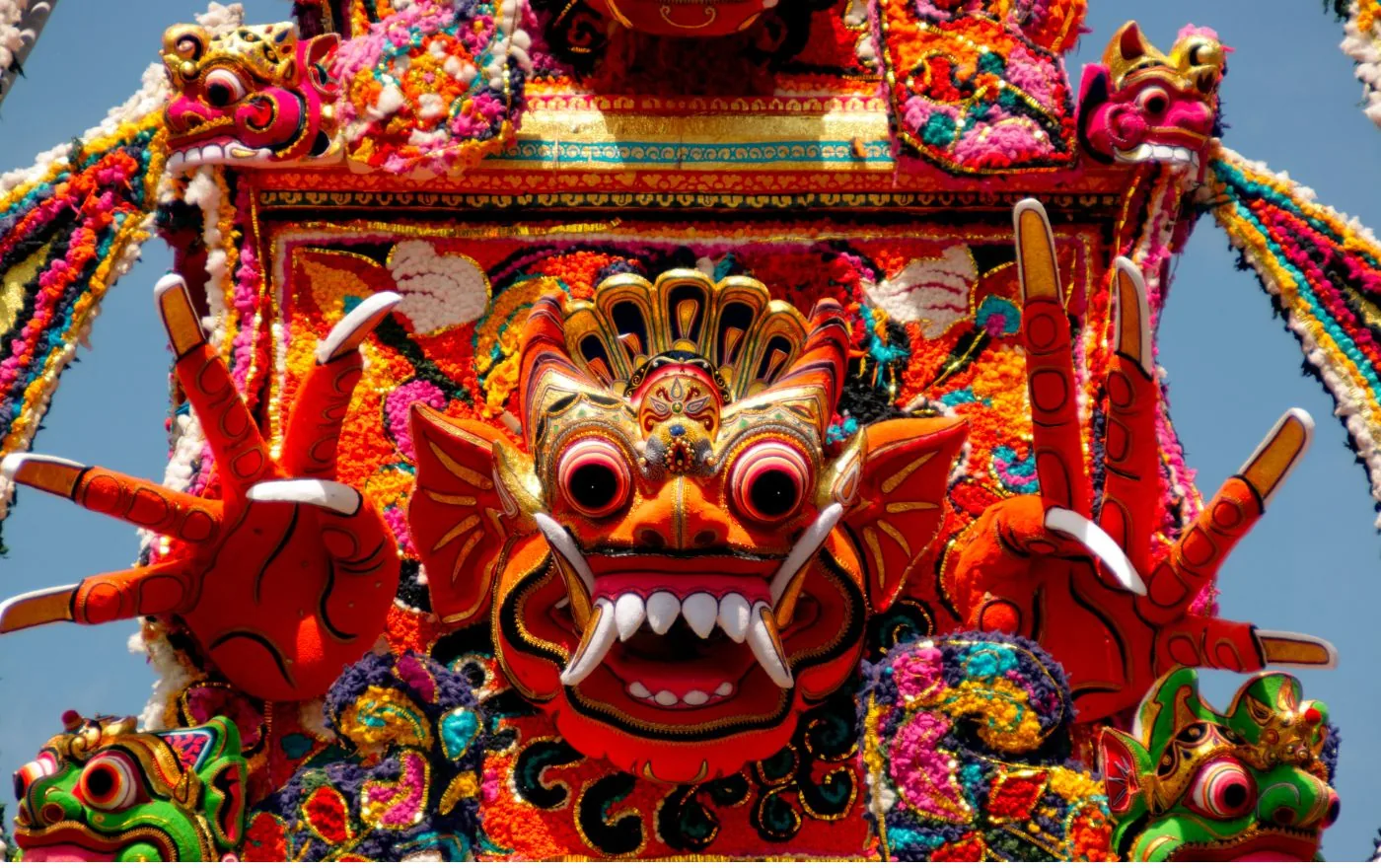
A ngaben cremation ceremony in Ubud, a colorful celebration of the soul's release
The Balinese spiritual calendar is intimately connected to the lunar cycle. Every full moon (Purnama) and every new moon (Tilem), special offerings and prayers take place across the island. Temples become more active, with ceremonies running throughout the day and into the evening. The full moon is considered the most auspicious time for spiritual activities, while the new moon is a time for introspection and purification.
Visiting a major temple during Purnama is an entirely different experience than visiting on an ordinary day. Tirta Empul, the sacred water temple near Ubud where Balinese come to purify themselves in holy spring water, is especially beautiful and spiritually charged during the full moon. Uluwatu Temple on the southwestern cliffs takes on a magical quality as the sun sets and the Kecak fire dance performance coincides with the moonrise. Besakih, the Mother Temple on Mount Agung, hosts elaborate ceremonies that draw worshippers from across the island.
If you have flexibility in your schedule, timing your temple visits to coincide with Purnama will give you a far more authentic and memorable experience. The energy at temples during the full moon is entirely different from a regular day. You will see real worship, real offerings, and real devotion rather than empty courtyards and selfie sticks.
Your driver can check the Balinese calendar and time your temple visits to coincide with Purnama for an unforgettable experience. This is the kind of insider knowledge that transforms a standard sightseeing day into something truly extraordinary.
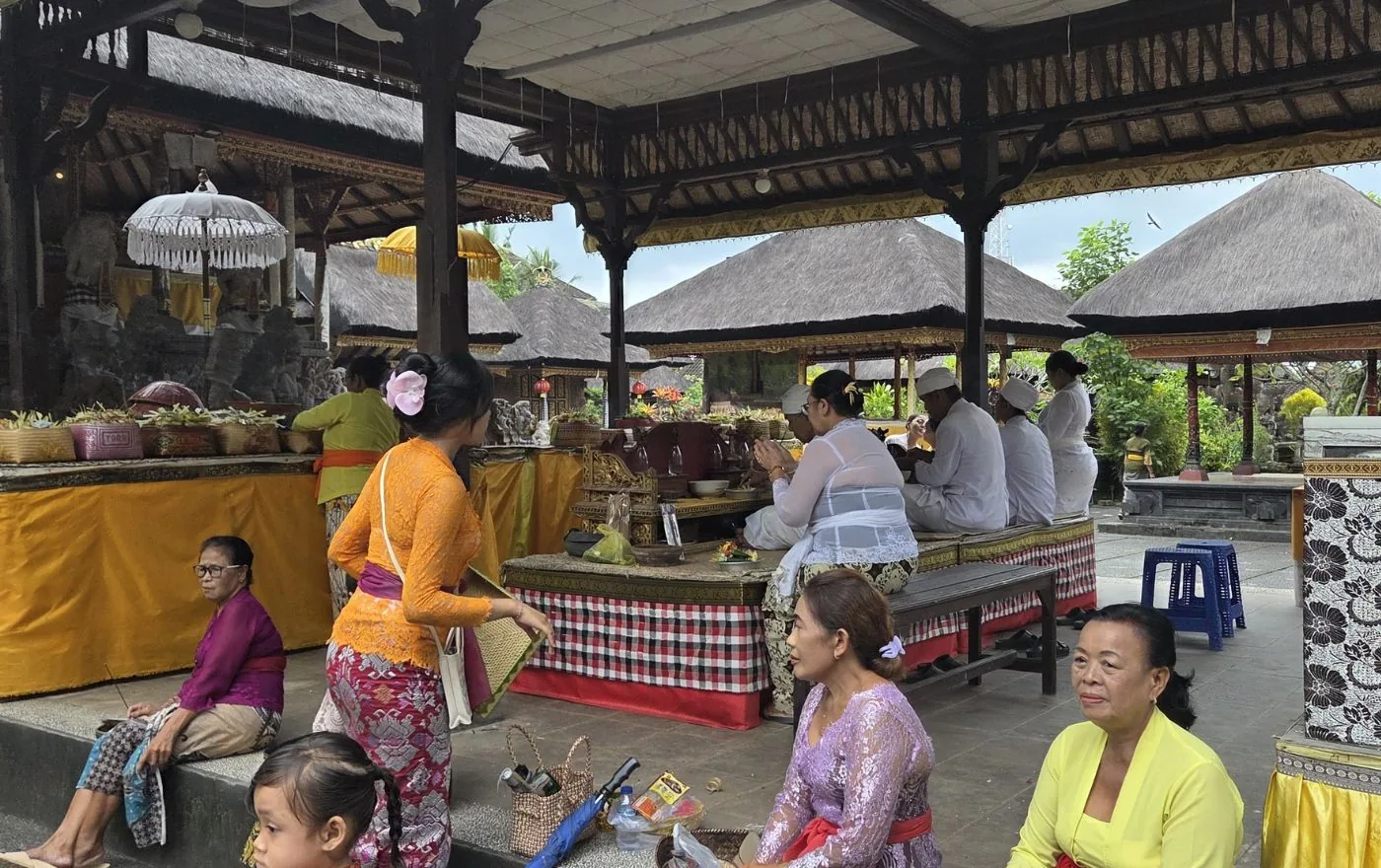
A Balinese temple comes alive during Purnama, the full moon ceremony
Metatah is one of the most intimate and symbolically rich ceremonies in Balinese culture. During this rite of passage, the upper canine teeth of adolescents are symbolically filed down by a priest using a small metal file. The filing is gentle and mostly ceremonial, but its spiritual significance is profound. The canine teeth are associated with animalistic qualities, and filing them represents the conscious choice to move beyond the base instincts that connect humans to the animal world.
The ceremony specifically addresses the Sad Ripu, the six enemies of the human character: desire (kama), greed (lobha), anger (krodha), confusion (moha), jealousy (matsarya), and intoxication or pride (mada). By symbolically removing the sharp points of the teeth, the young person declares their intention to control these negative traits and live a more spiritually balanced life. It is a beautiful concept that reflects the depth of Balinese philosophy about human nature and self improvement.
Metatah is a private family ceremony, and tourists rarely have the opportunity to see one. However, if you travel with a local guide who has connections in the community, there are occasions when visitors may be invited to observe. If this happens, it is an extraordinary honor and a window into a side of Balinese spiritual life that goes far beyond what most tourists ever experience. The ceremony is usually accompanied by offerings, prayers, and a family feast afterward.
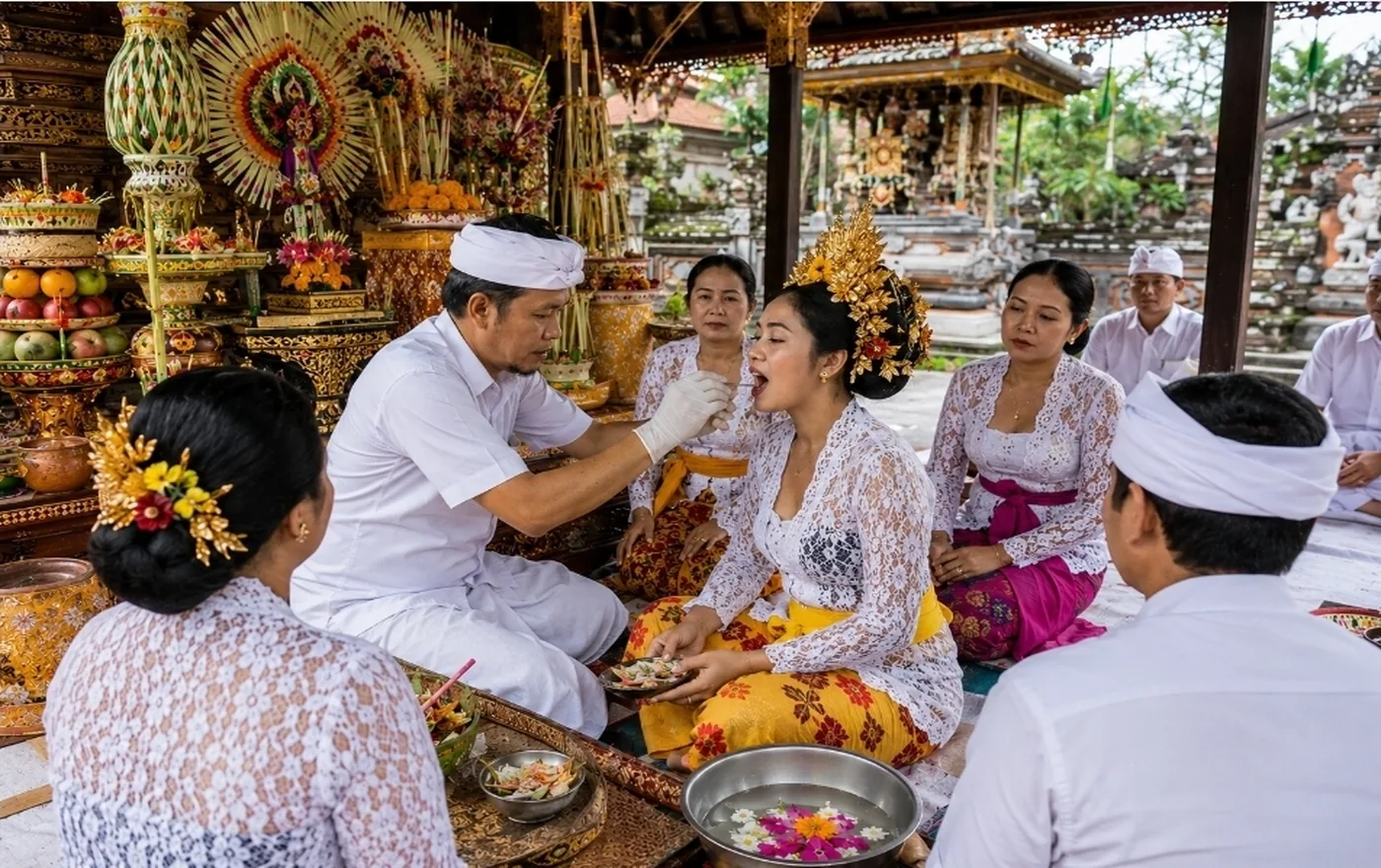
The sacred metatah ceremony, a Balinese coming of age tradition where teeth are symbolically filed
The Balinese are incredibly welcoming, but showing respect for their ceremonies will make your experience even richer.
Balinese ceremonies are not performances put on for tourists. They are a living, breathing spiritual practice that has continued unbroken for over a thousand years. The fact that visitors are welcome to witness and even participate in these sacred moments is a privilege that very few places in the world offer. Travel with a local guide who can explain what you are seeing, dress respectfully, and you will experience a side of Bali that goes far deeper than beaches and rice terraces.
Your driver is not just a driver. They are Balinese, they grew up with these ceremonies, and they can explain every offering, every prayer, and every tradition in a way no guidebook can. With a local guide by your side, you will move beyond simply watching ceremonies to truly understanding them.
Book Your Cultural Tour →